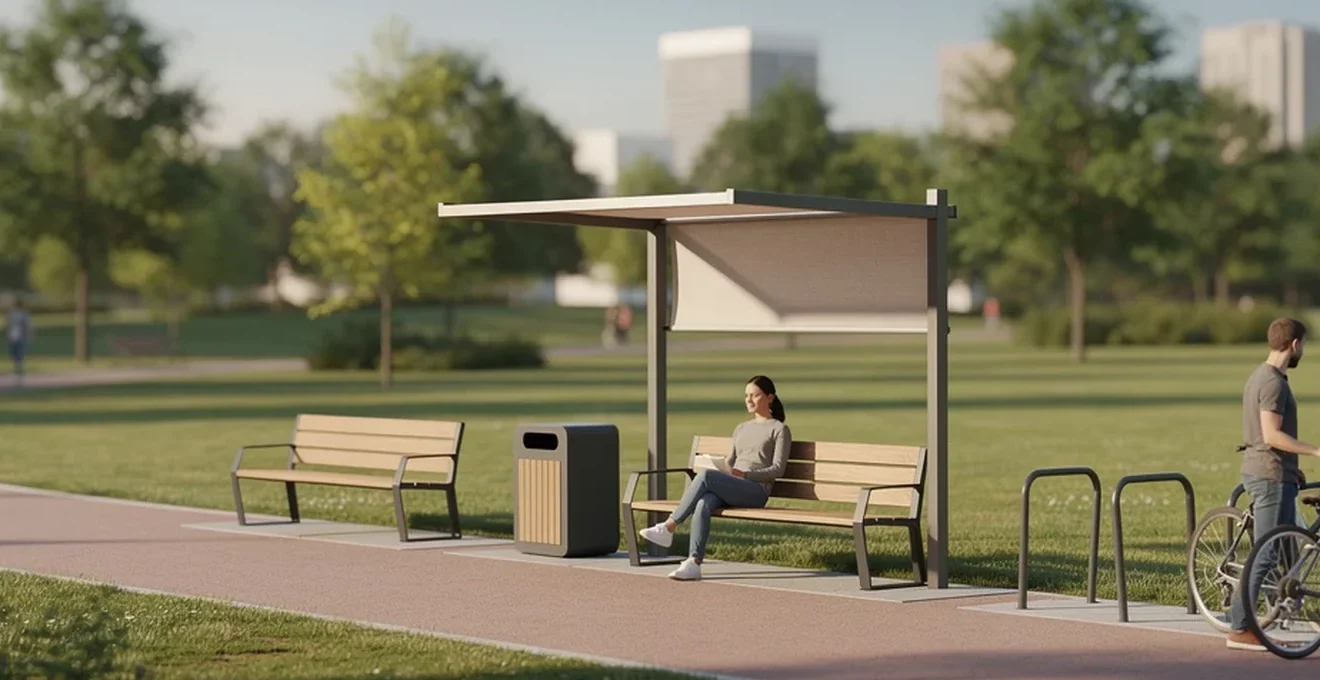
Public parks succeed or fail on the strength of their furniture. A well-placed bench, a shaded pergola or a durable litter bin can determine whether people linger, gather and return, or simply pass through. Outdoor furniture offers a direct physical experience of a place, unlike lighting or landscaping, which shape a space more indirectly. This article examines the core furniture categories that make parks functional, the materials that keep them durable, the accessibility standards that make them inclusive, and the layout principles that make them safe and comfortable to use. It also looks at how sustainability and maintenance affect long-term performance, and how notable parks have applied these principles in practice.
Core furniture categories shaping public park functionality
Every public park relies on a set of essential furniture types to support how visitors move through, rest in and use the space. Getting the mix right depends on understanding who uses the park, how often, and for what purpose.
Seating systems: benches, modular units, and ergonomic loungers
Seating is the most fundamental piece of park furniture. People engaged in both active and passive recreation need somewhere to rest, whether beside a pathway, under a tree, or within an open lawn. A varied mix of seating types serves different needs: benches and chairs for general use, picnic tables for families and groups, and loungers for more relaxed, individual use. Grouping some seats together encourages social interaction, while spacing others apart supports quiet reflection.
Placement matters as much as design. Seating should take advantage of scenic views, natural shade and proximity to amenities such as fountains or playgrounds, with enough capacity to handle peak usage without overcrowding. Accessibility should be considered from the outset, with a range of seat heights and options that include backrests and armrests for added comfort.
Waste management infrastructure: litter bins and recycling stations
Public bins and enclosures are essential to keeping shared spaces clean. Positioning bins at strategic locations makes it easier for the public to dispose of waste responsibly rather than leaving litter behind. Covered bins, such as those with a fitted lid, reduce exposure to rain and help prevent scavenging by wildlife, which keeps the surrounding area tidier and more hygienic.
Shade structures: pergolas, shade sails, and gazebos
Shade structures are essential for creating comfortable outdoor environments, particularly during sunny or hot periods. Pergolas, gazebos, umbrellas and trees each offer distinct benefits and aesthetic qualities, and a park benefits from a mix of these depending on its layout. Shelters should be strong and durable, allowing people to enjoy recreational activities in comfort regardless of the weather; a robust shelter with a corrugated roof, for example, can suit most urban park settings.
Placement is critical: shade structures should be positioned over seating areas, pathways and play zones to provide coverage during peak sun hours, protecting visitors from UV exposure. Integrating these structures into the wider design, using materials and styles that complement the existing landscape, helps them feel like a natural part of the park rather than an afterthought.
Bollards and bike racks for access control and cycling support
Controlling the flow of pedestrian and vehicle traffic supports the natural circulation, design continuity and safety of a public space. Bollards are an economical and effective way to achieve this. Removable bollards offer particular flexibility, allowing access to be opened or restricted as foot and vehicle traffic fluctuates throughout the day. Bike racks complement this infrastructure by giving cyclists a secure, designated place to park, encouraging active travel to and within the park.
Material selection and durability standards for outdoor furniture
The materials used in park furniture directly affect how long it lasts, how much maintenance it needs, and how it performs in different climates and conditions.
Galvanised steel and Powder-Coated aluminium frameworks
Powder-coated steel is widely used in outdoor furniture because it withstands the elements and heavy use while remaining relatively easy to clean and maintain. Powder-coated finishes also offer a range of aesthetic possibilities, allowing metal frameworks to suit both traditional and contemporary park designs without compromising structural performance.
Fsc-certified hardwood versus recycled HDPE plastic lumber
Timber remains a popular choice for its warm, inviting appearance, and treated wood is commonly specified for its resistance to outdoor conditions. Sustainably sourced wood, ideally certified to confirm it comes from responsibly managed forests, reduces the environmental impact of a project. Recycled plastics offer an alternative that diverts waste from landfill while still providing durability; high-quality plastics are noted among the excellent options for outdoor furnishings that can withstand heavy use. Choosing between the two often comes down to balancing aesthetic goals with sustainability priorities and maintenance capacity.
Corrosion resistance and UV-Stabilised coatings for coastal parks
Furniture placed in exposed or coastal locations faces additional stress from salt air, moisture and intense sunlight. Selecting finishes that are easy to clean and maintain, alongside materials chosen specifically for their ability to withstand the elements, helps furniture retain its appearance and structural integrity over time. This is particularly relevant for blue spaces such as ports, marinas and riverside parks, where seating needs to be both comfortable and safely located to allow visitors to appreciate scenic views without exposure to premature wear.
Concrete and Cast-Iron applications in High-Traffic zones
In areas subject to heavy footfall or frequent use, robust materials such as concrete and metal offer a modern, industrial aesthetic while providing the strength needed to endure constant contact. These materials pair well with high-quality plastics and treated wood elsewhere in the same space, allowing designers to concentrate the most durable materials where wear is greatest while using lighter or more decorative materials in quieter zones.
Universal design and accessibility compliance in park furniture
Public furniture should serve the full range of people who use a park, including those with different mobility needs, ages and sensory requirements. Accessibility should be considered a foundation of design rather than an add-on.
BS 8300 and equality act 2010 requirements for inclusive seating
Seating accessible to everyone, including people with disabilities, should offer a range of heights and include options with backrests and armrests for additional support. Designing with these considerations from the outset ensures that furniture serves the widest possible cross-section of park visitors, rather than requiring costly retrofits later.
Wheelchair-accessible picnic tables and transfer platforms
Multi-functional furniture, such as picnic tables designed to accommodate wheelchair users alongside other seated visitors, helps ensure that shared amenities genuinely serve everyone. Considering how people of varying mobility will approach, use and leave a piece of furniture is central to making a public space feel welcoming rather than exclusionary.
Sensory-friendly furniture for neurodivergent visitors
Technology-enabled furniture demonstrates one way that parks can better serve visitors with additional needs. New York’s Street Smart Furniture system, for example, is targeted at elderly users and people with disabilities, allowing them to control and adjust smart furniture through a smartphone app. After registering, users can adjust the intensity of street lighting, request audio information, or locate nearby amenities, depending on the setting. This kind of adaptable, user-controlled design points to how furniture can be tailored to a wider range of sensory and physical needs.
Site layout principles: positioning furniture for optimal use
Even well-designed furniture fails to perform if it is poorly positioned. Layout decisions influence safety, comfort and how naturally people move through a space.
Sightline analysis and CPTED principles for safety
Positioning seating and other furniture to take advantage of clear views across a park supports both comfort and a sense of security. Strategic placement near amenities such as fountains and playgrounds also allows visitors, including parents supervising children, to maintain visual contact with activity areas while resting.
Furniture spacing along desire lines and pedestrian corridors
Seating can be placed along the sides of pathways or playgrounds, under trees, or within open spaces, but spacing should reflect how people actually move through the park. Ensuring there is enough seating to accommodate peak usage times, without creating overcrowding, requires understanding patterns of use specific to each space and its typical visitors.
Solar orientation and microclimate considerations for seating placement
Shade structures and seating should be considered together, with shelters and pergolas placed to provide coverage over seating areas during the hours when sun exposure is most intense. This coordinated approach protects visitors from harmful UV rays while keeping seating areas usable and comfortable throughout the day.
Sustainability and maintenance protocols for Long-Term performance
Durable, well-maintained furniture reduces long-term costs and environmental impact, making sustainability and maintenance planning inseparable considerations in park design.
Life cycle assessment of recycled plastic versus timber furniture
Recycled plastics, sustainably sourced wood, and low-VOC paints and coatings all contribute to the environmental sustainability of a furnishing project. Eco-labelled furniture is a particularly strong option for public use, as such products are designed to be safe for both human health and the surrounding environment. Weighing the durability of each material against its environmental footprint helps determine which option best suits a specific park’s climate and usage levels.
Anti-vandalism design features and Graffiti-Resistant finishes
Furniture that is comfortable, durable, resistant and easy to maintain is better placed to withstand the wear that comes with heavy public use, including exposure to vandalism. Selecting finishes that clean easily and materials known for their resilience helps furniture retain its appearance and function despite the pressures of constant, unsupervised public access.
Scheduled maintenance frameworks and component replacement cycles
Public furniture should ideally remain cohesive with the existing theme and goal of the space while being easy to maintain over time. Establishing how much stakeholders or the community are willing to spend should happen early in a project, since quality outdoor furniture can be costly and ongoing upkeep needs to be budgeted for alongside initial installation.
Case studies: furniture design in notable public parks
Examining how real parks have applied these principles helps illustrate how furniture choices translate into everyday visitor experience.
Hyde park’s heritage bench restoration programme
Long-established parks often face the challenge of preserving the character of their original furniture while ensuring it continues to meet modern durability and accessibility expectations. Restoring heritage seating rather than replacing it outright allows a park to retain its historic identity while extending the functional life of existing pieces, reflecting the broader principle that furniture should endure and adapt across generations of users.
The high line’s integrated seating and planting systems
Combining seating directly with landscaping creates a more cohesive experience than treating furniture and planting as separate elements. Thoughtful landscaping that complements site furnishings, using a variety of plants to add colour, texture and seasonal interest, helps integrated seating feel like a natural extension of the surrounding environment rather than an isolated object placed within it.
Superkilen park’s culturally diverse street furniture selection
Parks function as great equalisers, bringing together people from a wide range of backgrounds. Proactively engaging the community when selecting furniture is one of the most effective ways to ensure a space reflects the people who use it, fostering a sense of belonging and shared ownership. A varied, culturally inclusive selection of street furniture can turn a park into a genuine meeting point, with the effectiveness of the design ultimately depending on the strategies, thinking and principles applied by those creating the space.