Cooking
Cooking has evolved far beyond the simple act of preparing food. It represents a fascinating intersection of science, art, and human connection, where chemistry meets creativity, and technique merges with instinct. Whether you’re a home cook eager to elevate your skills or an aspiring culinary professional, understanding the fundamental pillars that support exceptional cooking opens doors to limitless possibilities in the kitchen.
This comprehensive exploration covers the essential domains that define modern cooking: the scientific principles that govern flavor and texture, the geographical and ethical dimensions of ingredient sourcing, the rigorous standards that ensure safety, the expertise that transforms beverages into culinary partners, and the hospitality practices that turn meals into memorable experiences. Each element plays a vital role in creating food that nourishes both body and soul.
The Science Behind Culinary Excellence
Understanding the scientific principles at work in your kitchen transforms cooking from guesswork into precision. When you grasp why certain reactions occur, you gain the confidence to experiment, adapt, and create with intention.
Chemical Reactions That Build Flavor
Every cooking method triggers specific chemical transformations. The Maillard reaction, for instance, occurs when proteins and sugars interact under heat, creating the golden-brown crust on seared meat or the deep complexity of toasted bread. This reaction begins around 285°F (140°C) and intensifies as temperatures rise, developing hundreds of flavor compounds that our palates recognize as “delicious.” Similarly, caramelization transforms simple sugars into complex, bittersweet notes that add depth to everything from roasted vegetables to desserts.
Advanced techniques like spherification—where liquids are encapsulated in delicate membranes using sodium alginate and calcium chloride—demonstrate how scientific understanding enables entirely new textural experiences. These methods aren’t reserved for high-end restaurants; home cooks can apply the same principles to create memorable dishes.
Texture: The Often Overlooked Dimension
A dish’s success depends equally on how it feels in the mouth. Contrasting textures—crispy against creamy, tender alongside crunchy—create sensory interest that keeps each bite engaging. Consider a perfectly executed dish: perhaps a silky purée topped with crisp shallots, or a soft-braised short rib accompanied by al dente vegetables. These deliberate contrasts prevent palate fatigue and demonstrate thoughtful composition.
The danger lies in prioritizing visual appeal over actual eating experience. A beautifully plated dish that sacrifices flavor or texture for aesthetics ultimately disappoints. The most memorable meals balance all sensory elements harmoniously.
Modern Techniques Versus Traditional Methods
The debate between sous-vide and traditional braising illustrates how different approaches yield distinct results. Sous-vide cooking—where food is vacuum-sealed and cooked in precisely controlled water baths—offers unparalleled consistency and edge-to-edge doneness. A steak cooked sous-vide at 130°F (54°C) for two hours emerges uniformly medium-rare, requiring only a quick sear for crust development.
Traditional braising, however, creates complex flavors through gradual reduction and the intermingling of ingredients over hours. The connective tissues break down slowly, enriching the surrounding liquid with collagen that becomes silky gelatin. Neither method is inherently superior; understanding both allows you to choose the right tool for your desired outcome.
How Geography and Sourcing Shape Flavor
The ingredients you choose carry stories of soil, climate, and cultivation practices. Recognizing how geography influences flavor opens a deeper appreciation for what arrives on your cutting board.
Terroir: More Than Wine Country Talk
The concept of terroir—how a specific location’s soil composition, climate, and topography influence flavor—applies far beyond vineyards. A tomato grown in volcanic soil develops different mineral notes than one from sandy coastal earth. Coffee beans from high-altitude Ethiopian farms possess bright, floral characteristics impossible to replicate elsewhere. Understanding these geographical signatures helps you source ingredients intentionally and celebrate their unique qualities rather than fighting against them.
Soil composition particularly affects root vegetables and aromatics. Carrots grown in mineral-rich clay develop earthier, more complex flavors than those from sandy soils, which tend toward sweetness and delicacy.
The Harvest Timing Equation
Peak flavor rarely coincides with maximum shelf life, creating a fundamental tension in ingredient sourcing. Sugar content in fruits and vegetables reaches its zenith at specific ripeness windows. Tomatoes harvested slightly underripe for transport will never develop the complexity of vine-ripened specimens. Root vegetables pulled after the first frost convert starches to sugars as a natural antifreeze response, yielding sweeter, more nuanced flavors.
This reality makes relationships with local growers invaluable. Access to ingredients harvested at their flavor peak—even if their shelf life measures in days rather than weeks—elevates cooking in ways no technique can compensate for.
Wild Foraging Versus Commercial Cultivation
Wild ingredients offer intensity and uniqueness that cultivated varieties often lack. Foraged ramps possess a pungent complexity no farmed allium matches. Wild mushrooms develop concentrated flavors from competing for nutrients in forest ecosystems. However, commercial farming provides consistency, safety testing, and year-round availability that wild sourcing cannot.
The risk of monoculture—growing single varieties at scale—threatens flavor diversity. When markets demand uniform appearance and extended shelf life, the heirloom varieties and regional specialties that offer remarkable taste often disappear. Supporting diverse agricultural practices protects this flavor heritage.
Building Sustainable and Ethical Supply Chains
How ingredients reach your kitchen matters as much as the ingredients themselves. The economics and ethics of sourcing directly impact both community resilience and culinary quality.
Direct Sourcing: Rewards and Challenges
Establishing direct relationships with producers creates transparency and often superior quality. You understand exactly how your ingredients were grown, harvested, and handled. Farmers receive fair compensation rather than a fraction of retail prices. For restaurants, this connection enables menu customization—asking growers to cultivate specific varieties or harvest at particular stages.
The challenges include managing relationships with multiple small producers instead of one distributor, coordinating numerous small deliveries, and accepting seasonal variability that requires menu flexibility. Over-committing to small producers can create vulnerability if weather or circumstances disrupt their output, while under-committing leaves them financially unstable.
Seasonal Menu Variability as Strength
Embracing seasonality rather than fighting it creates menus that reflect natural rhythms. Spring’s delicate greens and shoots give way to summer’s abundant fruits and vegetables, then autumn’s hearty roots and squashes, followed by winter’s preserved and stored ingredients. This approach requires creativity and adaptability but rewards diners with ingredients at their peak and reduces environmental costs of off-season forcing or long-distance transport.
The local micro-greens versus imported produce question has no universal answer. Local micro-greens offer remarkable freshness and nutrient density, supporting nearby agriculture and reducing transportation impacts. However, imported citrus in winter or specific spices unavailable regionally remain necessary for diverse, satisfying menus. The goal is intentional balance, not dogmatic restriction.
Optimizing Logistics Without Compromising Values
Small-scale sourcing requires logistical creativity. Coordinating multiple deliveries from various farms demands careful scheduling. Some solutions include:
- Establishing regular pickup schedules at farmers markets or central distribution points
- Partnering with other restaurants to share delivery costs and minimum orders
- Working with food hubs that aggregate local products while maintaining producer identity
- Building storage and preservation capacity to handle seasonal abundance
These systems take time to refine but create resilient supply chains that benefit all participants.
The Art of Hospitality and Service Design
Exceptional cooking extends beyond the kitchen. The environment, service approach, and attention to guest experience determine whether a meal becomes truly memorable.
Understanding Guest Psychology
Anticipation shapes experience profoundly. From the moment guests make a reservation, they begin constructing expectations. Every touchpoint—confirmation communications, arrival welcome, menu presentation, pacing between courses—either reinforces or undermines their anticipated experience. Understanding this psychological journey allows you to design moments that surprise and delight while meeting core expectations.
The common mistake of neglecting the “last impression” can unravel an otherwise excellent meal. The final moments—payment process, farewell, and departure—leave lasting memories. A rushed checkout after a leisurely meal creates jarring dissonance. Thoughtful closing rituals, whether a small parting gift or genuine gratitude, send guests away with warm feelings that encourage return visits.
Environmental Design: Beyond Aesthetics
Dining room acoustics profoundly affect comfort and conversation. Hard surfaces create lively energy but can become overwhelming when sound levels prevent normal conversation. Strategic use of sound-absorbing materials—upholstered seating, acoustic panels disguised as design elements, even specific ceiling treatments—allows conviviality without cacophony. The ideal ambient noise level sits around 70 decibels—energetic enough to feel alive but quiet enough for easy conversation.
Lighting, temperature, and even scent contribute to the multisensory experience. Warm lighting (2700-3000K) creates intimacy and makes food appear more appetizing than cool fluorescents. Temperature comfort zones vary by culture but generally fall between 68-72°F (20-22°C), adjusted slightly based on season and menu richness.
Service Styles: Finding Your Philosophy
The formal service versus relaxed luxury debate reflects fundamental philosophical differences. Formal service emphasizes precision, choreography, and clear hierarchies—servers as knowledgeable guides executing seamless rituals. Relaxed luxury prioritizes genuine warmth and personalization over protocol, allowing staff personalities to shine while maintaining professionalism.
Neither approach is inherently better. The key is internal consistency: ensuring your service style aligns with your cuisine, environment, and guest expectations. A casual neighborhood bistro attempting overly formal service feels pretentious, while a fine dining establishment with overly casual service may seem unprofessional. Authenticity matters more than category.
The Grace of Table Turnover
Managing table turnover without rushing guests requires subtle skill. The goal is efficiency that serves the business while respecting guest autonomy. Techniques include:
- Reading guest cues—lingering conversations versus ready-to-leave body language
- Offering transitions naturally: “May I bring you coffee or tea?” rather than presenting the check unprompted
- Building reservation systems that accommodate both quick and leisurely dining preferences
- Training staff to distinguish between efficient and hurried service
Rushed guests rarely return. The art lies in creating flow that feels natural rather than forced.
Wine Expertise as a Culinary Cornerstone
Wine knowledge elevates the entire dining experience when approached as culinary partnership rather than pretentious ritual. Understanding pairing principles and list construction enhances both guest satisfaction and business success.
The Science of Food and Wine Pairing
Successful pairings consider multiple dimensions: weight, acidity, sweetness, tannin, and flavor intensity. A delicate fish overwhelmed by a bold Cabernet illustrates mismatch in weight and intensity. The classic pairing principles—complementary or contrasting—guide decisions. Complementary pairings echo similar flavors: earthy mushrooms with earthy Pinot Noir. Contrasting pairings create balance: rich, fatty salmon cut by high-acid Champagne.
Acidity in wine refreshes the palate, making it invaluable with rich or fatty foods. Tannins interact with proteins, softening in the presence of red meat. Sweetness in wine should generally match or exceed sweetness in food to avoid the wine tasting sour. Understanding these interactions transforms pairing from mystery to logical framework.
Building a Balanced Wine List
A thoughtfully curated list offers diversity across price points, styles, and regions without overwhelming choice. The ideal list includes:
- Accessible entry-level options that over-deliver on quality relative to price
- Mid-range selections representing various styles and regions
- Special occasion bottles for celebration or exploration
- Options by the glass that rotate regularly to maintain freshness and variety
The Old World versus New World balance matters too. Old World wines (European) often emphasize terroir, subtlety, and traditional methods. New World wines (Americas, Australia, New Zealand, South Africa) frequently showcase fruit-forward profiles and modern techniques. Offering both respects different preferences and occasions.
Storage and Service: Protecting Your Investment
Improper wine storage destroys quality quickly. The risks include temperature fluctuation (causing expansion and contraction that damages seals), excessive heat (accelerating aging and creating cooked flavors), light exposure (particularly for white and sparkling wines), and vibration (disturbing sediment and potentially affecting aging). Ideal storage maintains 55°F (13°C) with 70% humidity in darkness.
The up-sell conversation, when done thoughtfully, enhances rather than exploits. It involves understanding guest preferences through questions, offering relevant suggestions that genuinely improve their experience, and respecting budget signals. The goal is education and enhancement, not maximizing check averages at any cost.
Food Safety: The Foundation of Professional Cooking
No amount of flavor, creativity, or hospitality compensates for unsafe food. Rigorous safety standards protect guests and establish the trust that allows all other culinary elements to matter.
Understanding Bacterial Growth Zones
The danger zone—temperatures between 40°F and 140°F (4°C and 60°C)—allows rapid bacterial multiplication. Pathogenic bacteria double every 20 minutes in ideal conditions within this range. This reality demands that perishable foods spend minimal time in the danger zone. The common “two-hour rule” states that food left in this temperature range for over two hours (one hour above 90°F/32°C ambient temperature) should be discarded.
Cooking to proper internal temperatures kills most pathogens: 165°F (74°C) for poultry, 145°F (63°C) for whole cuts of beef and pork, 155°F (68°C) for ground meats. However, reaching these temperatures is only part of safety; preventing contamination and controlling time-temperature exposure throughout handling matter equally.
Cooling Methods: Blast Chilling Versus Ice Baths
Rapid cooling is crucial for food safety. Slow cooling allows dangerous bacterial growth as food slowly passes through the danger zone. Blast chillers use forced cold air circulation to drop temperatures quickly, achieving the recommended guideline of cooling from 135°F to 70°F (57°C to 21°C) within two hours, then to 41°F (5°C) or below within an additional four hours.
Ice baths offer an effective alternative when blast chillers aren’t available. Placing hot food in shallow containers surrounded by ice and water, with frequent stirring, achieves rapid cooling. The key is maximizing surface area and maintaining the ice bath’s temperature through ice replenishment.
Preventing Cross-Contamination
Cross-contamination—transferring harmful bacteria from one surface or food to another—represents one of the most common safety failures. The errors include:
- Using the same cutting board for raw meat and ready-to-eat foods without proper sanitizing
- Storing raw proteins above prepared foods in refrigerators (drips contaminating below)
- Neglecting hand-washing between handling different food categories
- Using contaminated utensils or wiping cloths across multiple surfaces
Prevention requires color-coded cutting boards, designated preparation areas, rigorous hand-washing protocols, and constant awareness of potential transfer paths.
Digital Logging Systems and Deep Cleaning Schedules
Modern food safety increasingly relies on documented monitoring systems. Digital logging—recording refrigeration temperatures, cooking temperatures, cleaning completion, and employee health checks—creates accountability and identifies problems before they cause illness. These systems also provide legal protection by demonstrating due diligence.
Deep cleaning schedules extend beyond daily surface sanitizing to include equipment disassembly, hood and vent cleaning, drain maintenance, and pest control monitoring. Establishing regular timelines—some tasks weekly, others monthly or quarterly—ensures that hidden contamination sources don’t accumulate. The most dangerous assumption is that visible cleanliness equals safety; thoroughness matters more than appearance.
Mastering cooking means embracing its full complexity: the scientific principles that govern transformation, the geographical and ethical dimensions of sourcing, the hospitality that frames the experience, the beverage knowledge that completes the table, and the safety standards that underpin everything. Each element reinforces the others, creating a comprehensive approach that transforms simple sustenance into meaningful experiences. Whether you’re cooking for family or managing a professional kitchen, these fundamental pillars provide the foundation for continual growth and excellence.
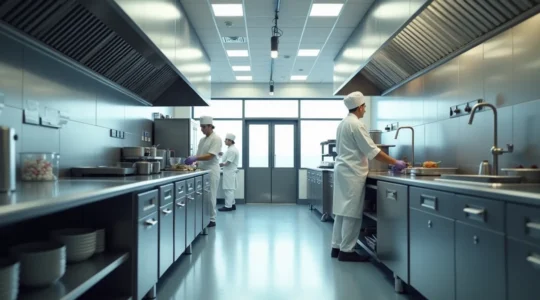
HACCP Hygiene Protocols: How to Pass a Health Inspection With Zero Violations?
Passing a health inspection is not about memorizing rules; it is about systematically eliminating the critical failure points an inspector is trained to identify. Compliance requires immutable, verifiable data, making digitized logs superior to fallible manual records. Controlling pathogen growth…
Read more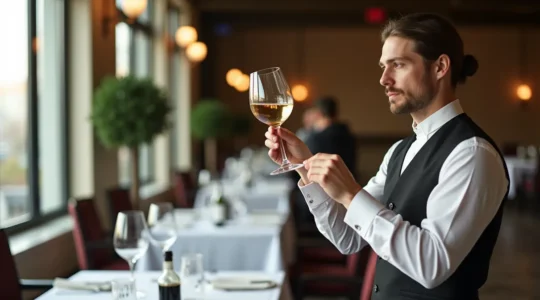
How a Sommelier Service Architects a 30% Increase in Check Average
A skilled sommelier is not a luxury expense but a high-yield investment, strategically engineering a 30% uplift in average check by transforming the wine program into a core profit center. Success hinges on moving beyond simple pairings to master the…
Read more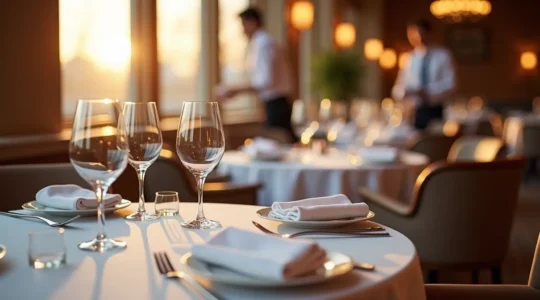
What Separates a Michelin-Star Service From a Good Dinner Out?
The critical difference between good and Michelin-level service is not superior politeness, but the execution of a meticulously engineered operational science. Exceptional service is a silent, choreographed performance designed to manage the guest’s perception of time, space, and comfort. Every…
Read more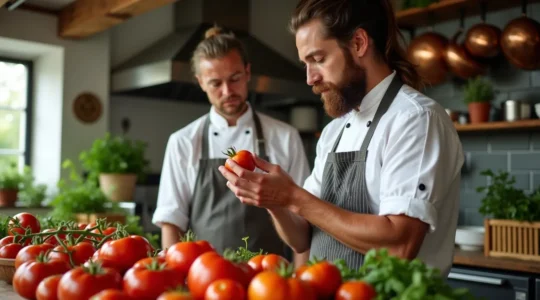
How Farm-to-Table Sourcing Builds a Resilient and Profitable Restaurant Supply System
In summary: Traditional restaurant supply chains are often inefficient, costly, and fragile, relying on multiple intermediaries. Shifting to a direct farm-to-table model isn’t just about freshness; it’s a strategic move to lower food costs by cutting out middlemen and reducing…
Read more
Why Terroir-Driven Ingredients Are the Backbone of Authentic Regional Cuisine?
Contrary to the romantic notion of a “taste of place,” the power of terroir lies in measurable science, not magic. An ingredient’s unique flavor is a direct biochemical signature of its specific geography, from soil mineralogy to microbial life. Factors…
Read more
How Molecular Gastronomy Transforms Simple Ingredients Into $200 Tasting Menus?
The transformation of simple ingredients into a high-value tasting menu is not a result of isolated scientific ‘tricks,’ but the application of a holistic culinary system. Technical precision, like controlling pH for spherification, is the non-negotiable scientific foundation. True value…
Read more