The highest ROI in smart home integration comes not from flashy gadgets, but from investing in future-proof, foundational infrastructure that buyers value as a permanent asset.
- Focus on security (smart locks, cameras) and robust structured cabling (Cat6a) as they offer quantifiable value increases and broad market appeal.
- Avoid proprietary, screen-based devices like smart mirrors that suffer from rapid tech depreciation and become e-waste, diminishing property value.
Recommendation: Prioritize installing permanent “smart fixtures” like neutral-ready switch boxes and using open-standard protocols like Matter to guarantee long-term compatibility and maximize your investment.
For real estate developers and flippers, the smart home market presents a confusing landscape of tempting technology. The common advice is to sprinkle in a few popular gadgets—a smart thermostat here, some connected lightbulbs there—in the hope of boosting a property’s appeal. However, this approach often overlooks a critical distinction for anyone focused on ROI: the difference between a disposable gadget and a valuable, permanent fixture. Many of today’s trendiest devices are destined for rapid obsolescence, becoming liabilities rather than assets within a few short years.
The true calculus for a developer isn’t about chasing the latest tech trend. It’s about making strategic investments that add tangible, lasting value to the property itself. This requires a shift in perspective. Instead of focusing on the surface-level appeal of a smart display or a voice-activated appliance, the smart money is on the foundational infrastructure that enables a truly intelligent and future-proof home. This is where real, defensible value is created—in the wiring, the systems, and the underlying architecture that buyers can’t easily replicate.
This article cuts through the hype to provide a value-driven appraisal of smart home features. We will explore which security devices offer the most significant returns, why unseen structured cabling is your best long-term bet, how to choose a control system that enhances rather than complicates a sale, and which high-depreciation items to avoid at all costs. The goal is to equip you with a clear framework for making smart home investments that directly contribute to your bottom line.
To navigate this complex but lucrative field, this guide breaks down the essential investment decisions you’ll face. The following sections offer a clear roadmap, from high-impact buyer features to the foundational choices that secure long-term value.
Summary: A Developer’s Roadmap to Smart Home ROI
- Why Smart Locks and Cameras Are the Top Selling Point for Millennials?
- How to Run Structured Cabling (Cat6a) During Renovation?
- Crestron or HomeAssistant: Which System Should a Developer Install?
- The “Smart” Mirror That Becomes E-Waste in 3 Years
- When to Install Smart Switches: Rough-in or Finish Phase?
- Which High-Tech Trends Will Dominate Smart Home Integration Next Year?
- Why Second-Tier Cities Are Outperforming Capitals in Appreciation?
- Which High-Tech Trends Will Dominate Smart Home Integration Next Year?
Why Smart Locks and Cameras Are the Top Selling Point for Millennials?
When allocating a tech budget, the first investment should be in smart security. Unlike niche gadgets, security features like smart locks and cameras resonate with a fundamental buyer need: safety and peace of mind. This category offers the most direct and easily quantifiable return, particularly with the largest demographic of homebuyers. With 63% of smart home technology users being millennials, catering to their priorities is a sound financial strategy. They perceive these devices not as luxuries, but as modern necessities for a connected lifestyle.
The value proposition is clear and compelling. A recent case study is particularly illuminating: properties equipped with comprehensive smart security systems not only sold faster but also commanded a significant premium. The study found that 78% of homebuyers were willing to pay an average premium of $18,056 for smart home capabilities, with security being a primary driver. This isn’t just about adding a feature; it’s about selling a lifestyle of convenience and security that buyers are actively seeking and willing to pay for.
For a developer, this data provides a clear directive. The investment in smart locks, integrated cameras, and video doorbells is not speculative. It directly translates into higher perceived value, faster sales cycles, and a stronger negotiating position. The table below breaks down the specific ROI potential for key security features, reinforcing their status as a cornerstone of any value-adding smart home strategy.
| Feature | Property Value Increase | Primary Buyer Appeal | Market Adoption Rate |
|---|---|---|---|
| Smart Locks | 3-5% | Millennials (63%) | 36.6% of US households |
| Security Cameras | Up to 5% | All demographics | 65% consider essential |
| Video Doorbells | 2-3% | Families with children | Growing 15% annually |
Ultimately, smart security is the low-hanging fruit of smart home integration. It offers a powerful combination of high buyer appeal, proven market demand, and a demonstrable increase in property value, making it the safest and most profitable starting point for any developer.
How to Run Structured Cabling (Cat6a) During Renovation?
While smart locks provide immediate, visible value, the single most important long-term investment a developer can make is one that buyers may never see: structured cabling. During a renovation, with walls open, running high-quality Ethernet cable like Category 6a (Cat6a) is a relatively low-cost addition that “future-proofs” a property for decades. In an era of remote work, 8K streaming, and an explosion of connected devices, robust and reliable connectivity is no longer a luxury—it’s essential infrastructure, as critical as plumbing or electrical wiring.
The ROI calculus is overwhelmingly positive. While wireless technology is constantly evolving and becoming obsolete, a high-quality cable is a permanent asset. Industry analysis shows that while Cat6A costs 30% more upfront than its predecessor Cat6, its 10 Gbps capability prevents costly retrofitting as data demands inevitably increase. Opting for cheaper wireless-only solutions is a short-sighted strategy that offloads future upgrade costs onto the buyer, a fact savvy consumers are beginning to recognize.
The key to maximizing ROI is strategic placement. Not every room needs a hardwired connection. Focus on locations where high-bandwidth, low-latency performance is non-negotiable. This targeted approach delivers maximum value without over-investing.
- Priority 1: Home Offices. This is non-negotiable. A dedicated Cat6a line ensures stable, 10 Gbps speeds for multiple, simultaneous video calls and large file transfers, a key selling point for remote professionals.
- Priority 2: Entertainment Centers. Future-proof the main living area for the demands of 8K streaming, immersive gaming, and next-generation virtual reality experiences.
- Priority 3: Ceiling Access Points. A wired backhaul for Wi-Fi routers is critical for reliable whole-home coverage. Placing drops in central ceiling locations is essential for Wi-Fi 6E and upcoming Wi-Fi 7 systems.
- Priority 4: Security Camera Runs. Cabling for cameras enables Power over Ethernet (PoE+), delivering both data and power through a single cable. This allows for high-resolution 4K cameras without the need for nearby power outlets, offering superior reliability over battery-powered wireless cameras.
By treating structured cabling as a core utility, you are creating a fundamentally more valuable property. You’re not just selling a “smart home”; you’re selling a “high-performance home” ready for whatever the future holds.
Crestron or HomeAssistant: Which System Should a Developer Install?
Once the foundational wiring is in place, the next decision is the home’s “brain”—the central control system. Here, developers face a critical choice between two philosophies: a high-end, proprietary system like Crestron, or a flexible, open-source platform like Home Assistant. The right answer depends entirely on the target market and your ROI strategy, not on which system has more features.
Crestron represents the pinnacle of luxury automation. It’s a professionally installed, turnkey solution known for its reliability and seamless integration. For properties in the top 1-5% of the luxury market, the Crestron brand name itself is a status symbol and part of the appeal. However, this comes at a substantial cost, with professional installation running many times that of an open-source alternative. For the vast majority of properties, this level of investment yields diminishing returns.
On the other side is Home Assistant, a powerful and endlessly customizable open-source platform. While it requires more technical know-how to set up, its major advantage is ecosystem agnosticism. It can integrate thousands of devices from hundreds of brands, freeing the homeowner from being locked into a single manufacturer’s expensive ecosystem. For a developer, installing a server ready to run Home Assistant offers maximum flexibility for the future owner at a fraction of the cost. As smart home integration expert Jay Basen notes in Residential Tech Today:
Crestron systems are ideal for the top 1-5% of the luxury market where the brand name itself is part of the appeal, while open-source platforms offer better ROI for 95% of properties
– Jay Basen, Residential Tech Today
For most developers and flippers, the most prudent strategy is to lean towards flexibility. By ensuring the foundational infrastructure (cabling, neutral wires) is in place, you empower the future buyer to choose their own ecosystem, whether it’s a DIY platform like Home Assistant or a professionally managed service. This approach maximizes market appeal without sinking capital into a proprietary system that may not align with the buyer’s preferences.
The “Smart” Mirror That Becomes E-Waste in 3 Years
The most crucial—and often most expensive—mistake in smart home integration is failing to distinguish between a permanent “fixture” and a disposable “gadget.” A fixture is a long-term asset that adds to the home’s core value, like a smart light switch or a thermostat. A gadget is a consumer electronic device with a short lifespan, like a smart speaker or, most notoriously, a smart mirror. These devices, with their built-in screens and proprietary software, are ticking time bombs of obsolescence.
Consider the “smart” mirror. It seems futuristic, but its value is tied to a rapidly aging screen and software that will likely be unsupported in 3-5 years. When it ceases to function or simply looks dated, it’s no longer a smart mirror; it’s just a very expensive, non-functional mirror that is now difficult to remove, potentially damaging the wall. This is the definition of negative ROI. Market analysis confirms this rapid decline, showing that smart devices with proprietary systems can lose 70% of their value within 3 years. They transform from a selling point into an eyesore that the new owner has to pay to replace.
To avoid these costly errors, developers should apply a rigorous investment test to any proposed smart feature. This simple checklist helps separate valuable, long-term fixtures from high-depreciation gadgets.
Your Action Plan: The Gadget vs. Fixture Investment Test
- Dependency Check: Does it run a proprietary OS that requires the original manufacturer’s servers to function? If yes, it carries a high risk of becoming obsolete when the company pivots or fails.
- Cloud Service Risk: Is the core function entirely dependent on a startup’s cloud service? If yes, avoid it for property investment, as a service shutdown renders the device useless.
- Built-in Screen Test: Does it have an integrated screen or digital display? If yes, accept that it will look hopelessly dated within 3-5 years, negatively impacting the room’s aesthetic.
- Removal & Repair Costs: Can the device be easily removed or replaced without leaving visible damage or requiring a tradesperson? If no, you must factor future removal and repair costs into your initial ROI calculation.
- Standards Compliance: Is the technology based on open, interoperable standards like Z-Wave, Zigbee, or Matter? If yes, it holds significantly better long-term value as it can integrate with future systems.
The guiding principle is simple: invest in the capability, not the device. Install the infrastructure that allows for smart functionality (like powered, wired locations), but let the short-lifespan, personal-preference gadgets be brought in by the homeowner.
When to Install Smart Switches: Rough-in or Finish Phase?
Smart light switches are a perfect example of a “smart fixture” investment. Unlike smart bulbs, which are disposable and can be rendered useless by a flick of the wrong switch, smart switches provide permanent, reliable control that adds real value to the home’s infrastructure. However, the biggest ROI is realized not by installing the smart switches themselves, but by making one critical decision during the electrical rough-in phase: running a neutral wire to every switch box.
This single, low-cost step is the key to future-proofing a home’s lighting system. Many smart switches require a neutral wire for continuous power, and not having one severely limits the choice of compatible devices. Retrofitting a neutral wire after the drywall is up is prohibitively expensive. By ensuring it’s present from the start, you are giving the future owner 100% compatibility with any smart switch on the market, a powerful and often overlooked selling point.
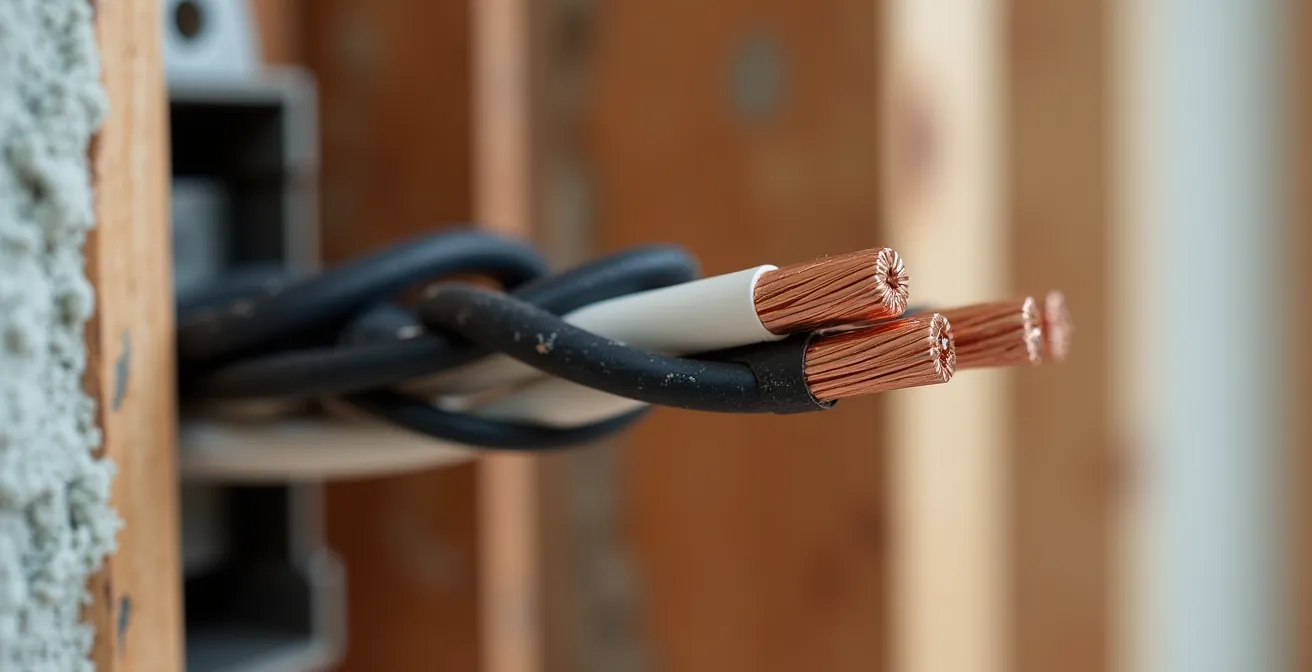
The cost analysis for a developer is clear. A hybrid strategy often yields the best results. During the rough-in, run the neutral wire everywhere—the marginal cost is minimal. Then, during the finish phase, install standard “dumb” switches in most locations but place a few high-impact smart switches in key areas like the entryway, kitchen, and master bedroom to showcase the home’s capability. This approach demonstrates the smart home potential without over-investing in specific hardware that a buyer might want to change.
As the following data from a comparative cost analysis shows, preparing for smart switches during the rough-in phase offers maximum flexibility for a minimal upfront cost, delivering the highest long-term value.
| Installation Phase | Cost per Switch | Future Flexibility | Staging Value |
|---|---|---|---|
| Rough-in with neutral wire | $15 additional | 100% switch compatibility | N/A |
| Finish with smart switches | $150-300 | Locked to brand | High impact |
| Hybrid strategy | $50 (staging only) | Maximum flexibility | Selective high-impact areas |
By focusing on the “smart-ready” infrastructure rather than the final device, you are making a more durable and valuable investment. You are selling potential and flexibility, which are far more appealing to a savvy buyer than a fixed set of proprietary switches.
Which High-Tech Trends Will Dominate Smart Home Integration Next Year?
Looking beyond the current landscape, a developer’s long-term success depends on anticipating the trends that will define buyer expectations tomorrow. While the tech world is filled with fleeting fads, two significant shifts are emerging that have the staying power to influence property value: the rise of the “Healthy Home” and the industry-wide adoption of the Matter protocol.
First, the concept of a smart home is expanding beyond convenience and security into personal well-being. This “Healthy Home” movement focuses on using technology to actively improve the living environment. As an industry report from Mordor Intelligence highlights, this is a powerful market force: “The shift to ‘Healthy Home’ automation focusing on air quality monitoring, water quality detection, and circadian rhythm lighting taps into deep post-pandemic buyer desires.” For developers, this means integrating sensors and systems that monitor and manage air quality (VOCs, CO2), filter water at the source, and automate lighting to sync with natural human sleep cycles. These features speak to a fundamental desire for a healthier living space, offering a compelling and emotional selling point.
Second, the problem of device incompatibility that has plagued the smart home industry is finally being addressed by Matter. This new open-source connectivity standard, backed by Apple, Google, Amazon, and hundreds of other companies, promises to make all certified devices work together seamlessly. For a buyer, a Matter-certified home removes the fear of vendor lock-in and technological obsolescence. It guarantees that the smart devices they buy in the future will work with the home’s existing infrastructure. A market impact analysis on the protocol notes that Matter-certified homes guarantee future compatibility across ecosystems, with over 3,200 device integrations possible through platforms like Home Assistant. This is a massive selling point, transforming the home from a collection of siloed gadgets into a unified, future-proof ecosystem.
By strategically investing in healthy home infrastructure and ensuring compatibility through standards like Matter, you are not just keeping up with trends. You are building a more resilient, desirable, and ultimately more valuable property that will stand out in the market for years to come.
Why Second-Tier Cities Are Outperforming Capitals in Appreciation?
The strategic application of smart home technology becomes even more critical when considering market context. While capital cities have high property values, their markets are often saturated with amenities, making it difficult for any single feature to stand out. In contrast, second-tier cities, which are seeing a surge in appreciation due to remote work and a search for better quality of life, present a unique opportunity for developers. In these less-saturated markets, a well-executed smart home package can be a powerful differentiator, not just an add-on.
The key is to tailor the investment to the market. A full Crestron system that might be expected in a prime London or New York property would be an over-investment in an emerging market. The goal is to provide a “metropolitan standard” of living that feels aspirational and modern, creating a significant value perception at a fraction of the cost. The focus should be on foundational features that deliver the most tangible benefits.
For developers targeting these high-growth secondary markets, the following investment strategy maximizes ROI:
- Focus on Affordable Ecosystems: Deploy systems built around Google Home or Amazon Alexa. These platforms deliver 80% of the most-desired benefits (voice control, basic automation) for 20% of the cost of high-end proprietary systems.
- Prioritize Foundational Features: Concentrate the budget on the essentials that buyers value most: a smart thermostat (like Nest or Ecobee), a robust smart security system (locks and cameras), and smart lighting in key areas.
- Invest in Enterprise-Grade Networking: With an influx of remote workers from capital cities, rock-solid, high-speed internet is a primary selling point. Investing in structured cabling and a prosumer-grade Wi-Fi network is a direct appeal to this lucrative demographic.
- Market as a Differentiator: Actively brand the property as a “next-generation smart home” in marketing materials. In a market where such features are still novel, this creates a powerful narrative that can justify a price premium and accelerate the sale.
In essence, smart home technology in these cities is not just about adding value; it’s about creating a new standard. It’s an opportunity to deliver a product that is demonstrably more advanced and desirable than the existing housing stock, driving both appreciation and buyer demand.
Key Takeaways
- True ROI comes from investing in foundational infrastructure (cabling, neutral wires) over depreciating gadgets.
- Smart security features offer the most reliable and quantifiable increase in property value, especially with Millennial buyers.
- Prioritizing open standards like Matter and flexible platforms like Home Assistant future-proofs the property and avoids costly vendor lock-in.
Which High-Tech Trends Will Dominate Smart Home Integration Next Year?
Ultimately, navigating the ever-changing landscape of smart home technology is not about predicting the single next “killer app.” For a developer focused on resale value, it’s about adopting a durable investment philosophy. The specific trends, whether it’s healthy home automation or AI-driven energy management, will evolve. What will not change is the fundamental principle that lasting value resides in the home’s permanent infrastructure, not in its disposable electronics.
A successful strategy synthesizes the lessons learned throughout this guide into a coherent framework. It means starting with the non-negotiable value of smart security, which offers immediate and broad appeal. It means committing to the unseen but critical work of running structured cabling and neutral wires, establishing a high-performance foundation for any future technology. It means making a conscious choice to install “smart fixtures” like switches and outlets over “smart gadgets” like mirrors and displays that are destined for the landfill.
This approach transforms a property from being merely “smart” to being “intelligent.” A smart home is defined by the devices it contains today. An intelligent home is defined by its capacity to seamlessly adopt the technology of tomorrow. By investing in the foundation, you are giving future owners the ultimate luxury: choice. They are not locked into your aesthetic or your preferred tech ecosystem. They have a robust and flexible platform upon which they can build their own perfect smart home, and that flexibility has immense value.
Therefore, the final step for any developer is to integrate this philosophy into your project’s DNA. Assess every tech decision not on its “wow” factor today, but on its projected value, compatibility, and durability in five or ten years. That is how you move from simply flipping houses to building long-term, high-value real estate assets.