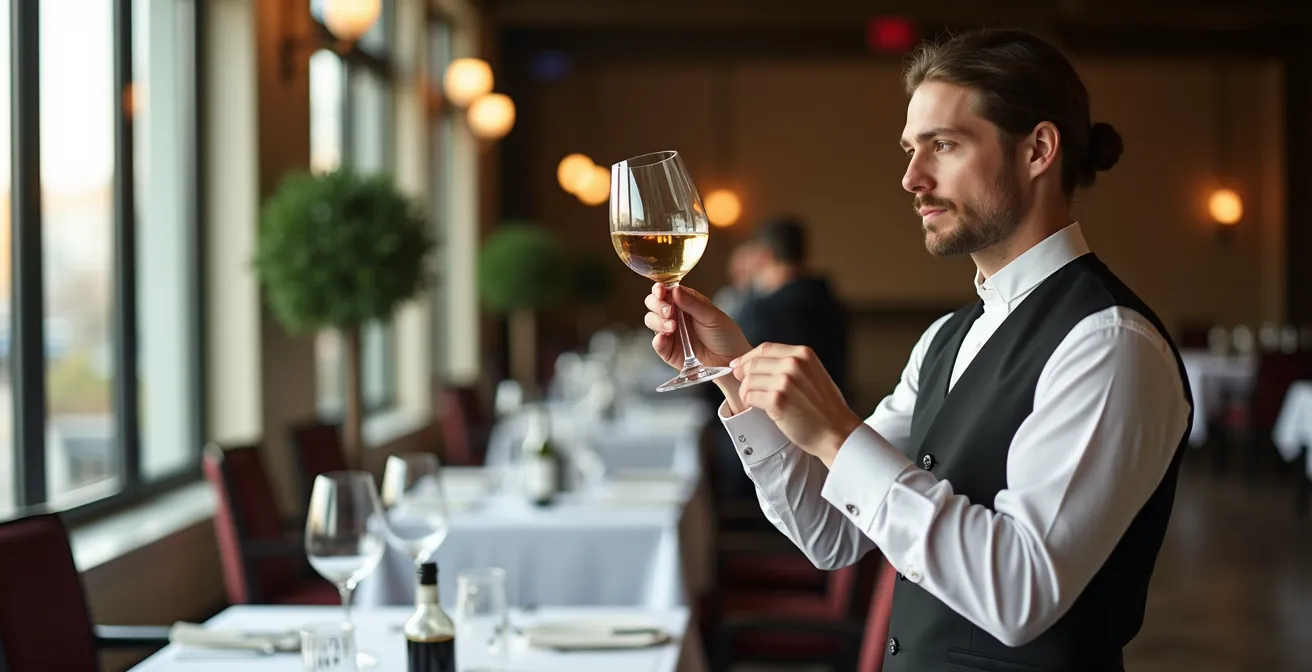
A skilled sommelier is not a luxury expense but a high-yield investment, strategically engineering a 30% uplift in average check by transforming the wine program into a core profit center.
- Success hinges on moving beyond simple pairings to master the psychology of menu design, the science of inventory management, and the art of the subtle upsell.
- By leveraging deep knowledge, a sommelier mitigates revenue-killing mistakes and unlocks dormant value in high-end inventory.
Recommendation: Re-evaluate your beverage program not as a cost center, but as a strategic asset managed by a profitability architect—the modern sommelier.
For many restaurant owners, the mention of a 30% increase in the average check sounds aspirational, if not unattainable. The conventional wisdom focuses on trimming food costs or increasing table turnover—a game of diminishing returns. Yet, a powerful and often underestimated revenue driver lies dormant in most establishments: the wine program. The common perception is that a sommelier simply recommends wine. This fundamentally misunderstands the role. A true Master Sommelier is a profitability architect, a strategist who manipulates variables far beyond the grape.
The journey to higher profitability isn’t about just having a better wine list; it’s about engineering the entire guest experience to encourage higher spending while simultaneously increasing satisfaction. This involves a sophisticated blend of chemistry, psychology, operational logistics, and sales finesse. It’s about understanding not just what pairs well, but *why* something clashes, how a price on a menu psychologically influences a choice, and how to protect your most valuable liquid assets from the elements. This is the difference between simply serving wine and orchestrating a profitable beverage program.
This guide moves beyond the platitudes to deconstruct the specific mechanisms a sommelier employs to achieve this significant financial uplift. We will explore the scientific foundations of pairings, the strategic curation of a wine list, the operational discipline required for inventory control, and the nuanced art of suggestion. By understanding these pillars, you can begin to view your sommelier or beverage manager not as an expense, but as the cornerstone of your financial growth strategy.
This article dissects the core strategies and esoteric knowledge that empower a sommelier to become a restaurant’s most valuable player. From the chemical reactions on the palate to the psychology of the sale, discover the precise levers used to elevate both the dining experience and the bottom line.
Summary: The Sommelier’s Playbook for a 30% Check Increase
- Why Tannins Clash With Oily Fish on a Chemical Level?
- How to Curate a Wine List With Options at Every Price Point?
- Terroir or Technology: Which Wine Style Appeals to Younger Drinkers?
- The Temperature Fluctuation That Turns Your Vintage Investment to Vinegar
- How to Suggest a Premium Bottle Without Sounding Pushy?
- How to Structure Art Donations to Maximize Fiscal Deductions?
- Identifying High-Yield ROI Opportunities in a High-Inflation Economy?
- How Molecular Gastronomy Transforms Simple Ingredients Into $200 Tasting Menus?
Why Tannins Clash With Oily Fish on a Chemical Level?
A sommelier’s value begins at the molecular level. Preventing a single bad experience is as crucial as creating a dozen good ones, as a negative sensory memory can destroy a guest’s trust. The classic rule “no red wine with fish” is an oversimplification, but its origins are rooted in a specific and unpleasant chemical reaction. The conflict isn’t between wine and fish in general, but between tannins and fish oils. Tannins, the phenolic compounds found in red wine that create a drying sensation, react poorly with the omega-3 fatty acids in oily fish like salmon, mackerel, or sardines.
The core of the issue is iron. Authoritative research shows that oily fish with high iron content react with wine tannins, creating a distinctly metallic and unpleasantly fishy aftertaste on the palate. This is a point of “revenue friction” that a knowledgeable sommelier navigates instinctively. By understanding this, they can steer a guest away from a disastrous Cabernet Sauvignon with their salmon and towards a low-tannin red like a Gamay or a crisp, acidic white that cleanses the palate.
As wine expert Madeline Puckette of Wine Folly notes, the science can be counterintuitive. She explains how the interaction undermines a common pairing principle:
Tannin and fat actually counteract each other quite well, so it would seem like an oily fish such as salmon would pair well with a red wine. The reason it doesn’t work is because the tannin in the wine and the fattiness of the fish cancel each other out leaving you with a residual fishy flavor.
– Madeline Puckette, Wine Folly
This expertise is a direct sales tool. A sommelier builds immense trust by demonstrating this deep knowledge, advising against a problematic choice and then guiding the guest to a superior, often equally profitable, alternative. This turns a potential complaint into a moment of education and elevated service, solidifying the guest’s confidence for future, more ambitious recommendations.
How to Curate a Wine List With Options at Every Price Point?
The wine list is not a mere menu; it is the sommelier’s primary tool for psychological influence and revenue engineering. A poorly constructed list leaves money on the table, while a strategically designed one guides guests toward high-margin selections without them even realizing it. The secret lies in understanding and leveraging cognitive biases, particularly the concept of price anchoring. A common mistake is to list wines from cheapest to most expensive, which encourages guests to pick from the bottom. A master sommelier inverts this logic.
The most effective wine lists are curated into tiers designed to make the restaurant’s target price point seem like the most logical and reasonable choice. This involves creating a deliberate structure with an ultra-premium “anchor” or “decoy” option. The purpose of a $500 bottle on the list is not necessarily to be sold, but to make a $150 bottle appear far more reasonable by comparison. This reframes the guest’s perception of value. The average markup on a bottle can range from 200-400%, and this psychological structuring ensures you capture sales in the most profitable segment of that range.
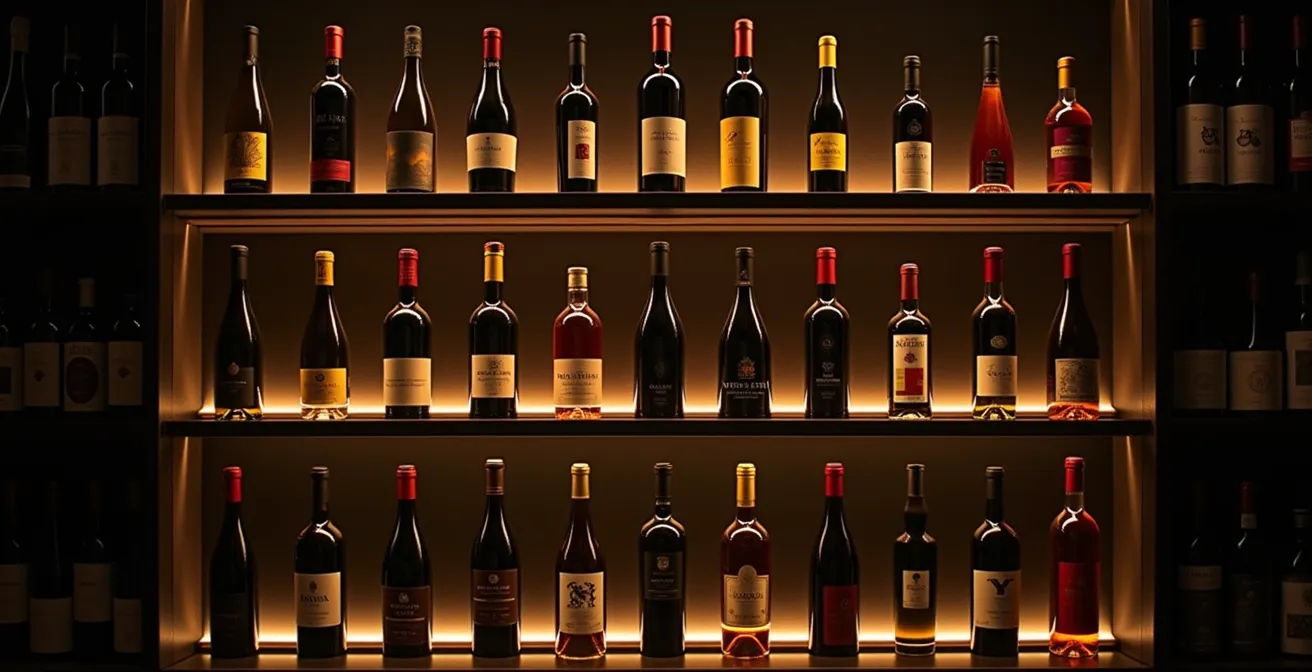
This tiered approach builds a framework for profitability. An entry-level tier builds trust by signaling fairness, while the anchor tier sets a high-value perception. The premium tier, typically where the most desirable sales and highest margins lie, becomes the “sweet spot” that guests naturally gravitate towards.
This strategic pricing is a core tenet of modern menu engineering. The table below, based on an analysis of psychological pricing techniques, breaks down the purpose and impact of each tier.
| Price Tier | Purpose | Customer Impact |
|---|---|---|
| Ultra-Premium ($500+) | Anchor/Decoy | Makes $150 wines appear reasonable |
| Premium ($80-$150) | Target Sale | Most selected after seeing anchor |
| Entry-Level ($40-$60) | Trust Builder | Signals fairness and quality |
Terroir or Technology: Which Wine Style Appeals to Younger Drinkers?
A restaurant’s long-term financial health depends on its ability to attract the next generation of diners. However, the wine industry faces a significant challenge with this demographic. While they are adventurous and willing to spend, their preferences are often misunderstood. Recent reports indicate that wine consumers under 40 account for a disproportionately low share of consumption, a stark warning sign for establishments that fail to adapt. Capturing this market requires a nuanced approach that balances two competing narratives: the romance of terroir and the appeal of technology.
Terroir-driven wines—those that express a unique sense of place, heritage, and artisanal craftsmanship—appeal to the desire for authenticity and storytelling. This narrative resonates with younger consumers who value provenance and sustainability. A sommelier can frame a biodynamic wine from a small, family-owned vineyard not just as a beverage, but as a story of a specific hillside and a philosophy of farming. This taps into the experiential spending trend, where the story is as valuable as the product itself.
Conversely, “tech” wines—those crafted with cutting-edge viticultural science, innovative fermentation techniques, or even de-alcoholization technology—appeal to a different facet of the modern palate. These wines can be framed around narratives of precision, consistency, and innovation. A sommelier might highlight a wine created using satellite imagery to achieve perfect ripeness, appealing to a guest’s appreciation for modernity and progress. A significant indicator of this shift is that Silicon Valley Bank reports that drinkers under 40 currently represent a small but growing segment that is highly influenced by these modern narratives.
The successful sommelier does not choose one over the other but curates a “discovery zone” on their list. This section might feature:
- Natural, orange, and biodynamic wines (terroir/authenticity).
- Wines from unexpected regions or made with novel techniques (technology/innovation).
- High-margin tasting flights designed to encourage exploration.
This approach transforms the wine list from a static menu into an engaging, interactive experience that generates buzz and attracts a clientele vital for future growth.
The Temperature Fluctuation That Turns Your Vintage Investment to Vinegar
A fine wine collection is one of a restaurant’s most significant capital assets, yet it is also one of its most fragile. The difference between a $1,000 bottle of Grand Cru Burgundy and a worthless drain-pour can be a matter of just a few degrees. Improper storage is a silent killer of profit. Even minor temperature fluctuations, if consistent, accelerate a wine’s aging process, “cooking” the delicate fruit flavors, dulling the aromas, and ultimately turning a prized vintage into vinegar. This process, known as heat damage or “maderization,” is irreversible.
The financial stakes are enormous. Beyond the loss of a single bottle, improper storage degrades your entire inventory, eroding its value and your restaurant’s reputation. A sommelier’s role as a profitability architect extends to rigorous operational oversight of the cellar. This means ensuring a rock-solid, consistent temperature (typically 55°F or 13°C) and managing humidity levels to keep corks from drying out. A variance of even 5-10 degrees can compromise long-term aging potential and turn a high-yield asset into a liability.
This extreme close-up of a perfectly chilled bottle highlights the delicate balance required. The condensation is a visual cue of a cellar operating at peak efficiency, protecting the investment within.

Moreover, modern technology has transformed storage from a passive act of preservation into an active revenue-generating strategy. Professional preservation systems like Coravin allow a sommelier to pour a single glass from an ultra-premium bottle without pulling the cork, preserving the rest of the wine for weeks or months. This is a form of asset liquification. A $2,000 bottle that might sit in the cellar for a year can now be sold by the glass for $250, generating immediate cash flow and allowing guests to taste extraordinary wines they would never purchase by the bottle. This technique alone can fundamentally alter the economics of a fine dining beverage program.
How to Suggest a Premium Bottle Without Sounding Pushy?
The moment of the wine sale is where a sommelier’s expertise translates directly into revenue. The difference between an average check and an exceptional one often comes down to a single, well-executed suggestion. However, the fear of appearing “pushy” or “salesy” paralyzes many service professionals. A master sommelier overcomes this by reframing the interaction from a sale into a collaborative act of discovery. The goal is not to sell the guest something they don’t want, but to give them permission to order the exceptional bottle they secretly desire.
This is achieved through a series of sophisticated verbal and non-verbal techniques. It begins with a rapid qualification of the table—observing guest dynamics, the occasion, and subtle budget cues within the first 30 seconds. Is it a celebratory anniversary, a corporate power dinner, or a casual Tuesday night? Each scenario requires a different approach. The key is to make the recommendation feel like an insider tip, a piece of privileged information shared to enhance their specific experience.
One of the most powerful techniques is verbal anchoring, a psychological strategy that mirrors the price anchoring on the wine list. By starting the conversation with a top-tier option, the sommelier sets a high-value frame of reference before pivoting to a more accessible, but still premium, choice. This makes the final suggestion feel like a discovery and a smart value proposition, rather than an upsell. The following checklist outlines the core steps to mastering this subtle art.
Your Action Plan: The Art of the Premium Suggestion
- Set the Anchor: Begin by mentioning a top-tier “special occasion” bottle to frame the value scale (e.g., “For a truly memorable experience, the cellar holds a Château Latour…”).
- Execute the Pivot: Immediately transition to your target recommendation (e.g., “…but the wine I’m most excited about for your selections tonight is this exceptional Premier Cru from a smaller producer at $200.”).
- Qualify the Guest: In the first 30 seconds, assess the table’s context—is it a celebration, a business meeting, a casual meal? Tailor your language accordingly.
- Identify Alternative Upsells: If a full premium bottle is declined, pivot to other high-margin suggestions: a second, different bottle for the main course, a half-bottle of dessert wine, or a magnum for a large party.
- Frame as an Insider Tip: Present your recommendation not as a sales pitch, but as sharing a personal discovery or a “sommelier’s secret” to create a conspiratorial bond with the guest.
By mastering these steps, the sommelier transforms a transactional moment into a relational one. They become a trusted guide, not a salesperson, leading the guest to a better experience and, consequently, a significantly higher check average.
How to Structure Art Donations to Maximize Fiscal Deductions?
The role of a top-tier sommelier, particularly in establishments courting a high-net-worth clientele, often transcends the cellar. They become curators of the entire luxury experience, and this includes understanding the ecosystem of wealth, art, and philanthropy that their guests inhabit. While structuring art donations for fiscal deductions is the domain of tax professionals, a sommelier’s awareness of this world serves a strategic business purpose. It informs the creation of an environment where a premium price point feels not just justified, but natural.
A restaurant adorned with significant works of art communicates a level of sophistication and investment that psychologically primes guests to spend more. It transforms the dining room from a place to eat into a cultural destination. The sommelier, as the floor’s lead connoisseur, can leverage this. A casual mention of the provenance of a piece on the wall while discussing the history of a vintage Bordeaux creates a powerful synergy. It links the wine, the food, and the environment into a single, cohesive narrative of quality and exclusivity.
Understanding the motivations of art-collecting patrons allows the sommelier to engage on a deeper level. They can speak the language of auctions, biennials, and charitable galas, building a rapport that goes far beyond wine. This relationship-building can lead to hosting exclusive, high-ticket wine dinners for the collector and their circle, or even partnering on charity events where the restaurant and its wine program are showcased to an affluent audience. In this context, the sommelier acts as a brand ambassador, using cultural literacy to attract and retain the most profitable segment of the market.
Ultimately, the sommelier’s knowledge in this area is not for providing tax advice, but for orchestrating an atmosphere of such palpable quality that the price of a premium bottle of wine becomes an incidental part of a much larger, more valuable cultural experience. It’s about ensuring the perceived value of the entire evening matches the prices on the check.
Identifying High-Yield ROI Opportunities in a High-Inflation Economy?
In a high-inflation economy, restaurants face a dual threat: rising operational costs and decreased consumer discretionary spending. This is where a sommelier’s function as a profitability architect becomes most critical. Their focus must shift from simply selling wine to actively identifying and exploiting every possible high-yield Return on Investment (ROI) opportunity within the establishment. This requires a CFO-like mindset, constantly analyzing data to pinpoint where value is being lost and where it can be created.
The first and most obvious area is inventory optimization. In an inflationary environment, wine inventory is not just a product to be sold; it’s an appreciating asset. A sommelier with a keen market sense will strategically purchase wines that are projected to increase in value, effectively using the cellar as a hedge against inflation. They will also ruthlessly analyze sales data to eliminate slow-moving “cellar-cloggers” and double down on high-margin, high-turnover items. This transforms the cellar from a cost center into a dynamic investment portfolio.
The second area is staff training. A single sommelier can only be at one table at a time. The highest ROI activity they can perform is to elevate the wine knowledge and sales confidence of the entire service team. A well-trained server who can confidently recommend a $70 bottle instead of deferring to the house red can increase the check average across all their tables, every single night. The sommelier architects this by creating targeted training programs, cheat sheets, and incentive programs that turn every server into a mini-sommelier and a profit generator.
Finally, a strategic sommelier looks beyond the dining room to ancillary revenue streams. This could involve:
- Curating and selling retail wine packs for guests to take home.
- Hosting paid, ticketed tasting events on typically slow nights.
- Establishing a wine club with a recurring subscription fee for exclusive access and allocations.
These initiatives leverage the sommelier’s expertise to create new, high-margin revenue streams that are less susceptible to the whims of nightly service, providing a crucial financial buffer in a challenging economic climate.
Key Takeaways
- A sommelier’s value is measured in ROI, not just wine knowledge; they are a strategic business partner.
- Menu engineering and price psychology are more powerful than traditional sales tactics for increasing check averages.
- Protecting wine inventory through precise operational control is as crucial as selling it.
How Molecular Gastronomy Transforms Simple Ingredients Into $200 Tasting Menus?
The pinnacle of a sommelier’s craft is reached when they partner with a chef operating at the highest levels of culinary innovation, particularly in the realm of molecular gastronomy. This discipline, which uses scientific principles to deconstruct and reinvent food textures, flavors, and appearances, presents the ultimate pairing challenge. A $200 tasting menu is not just a series of dishes; it’s a meticulously choreographed performance. The sommelier’s role is to compose the liquid score for this performance, a task that demands a profound understanding of flavor chemistry.
Traditional pairing rules often fail in this context. How do you pair a wine with an “olive oil powder,” a “hot and cold tea,” or a “spherified pea”? The sommelier must move beyond matching flavor profiles and begin to think about matching sensory experiences. They might pair a wine with a high-vibrancy acidity to cut through a rich, unexpected foam, or a wine with a specific mineral note to echo a synthetic “earth” element on the plate. This creates a dialogue between the kitchen and the cellar, where each course and its paired beverage elevate one another into something transcendent.
This level of synergy is a massive driver of profitability. A tasting menu with a perfectly executed wine pairing commands a significantly higher price and margin than à la carte dining. Guests who opt for such an experience are not just buying dinner; they are buying a story, a show, and a memory. The sommelier’s ability to articulate the “why” behind each unconventional pairing—explaining how a specific wine’s effervescence is designed to interact with a dish’s ethereal texture—becomes part of the entertainment and justification for the premium price.
Furthermore, this collaboration creates unique, press-worthy experiences that build the restaurant’s brand and attract a clientele of culinary adventurers. The sommelier and chef work together as experiential engineers, transforming humble ingredients and carefully selected wines into a high-margin, unforgettable event. This is the ultimate expression of the sommelier’s ability to create value, turning a deep, almost scientific, knowledge of wine into a powerful tool for storytelling and profit.
By viewing the sommelier as a profitability architect, you unlock a new paradigm for restaurant management. The 30% increase in check average is not a magic trick; it is the logical outcome of a strategic, multi-faceted approach to value creation. To begin this transformation in your own establishment, the next step is to conduct a thorough audit of your current beverage program and service standards.