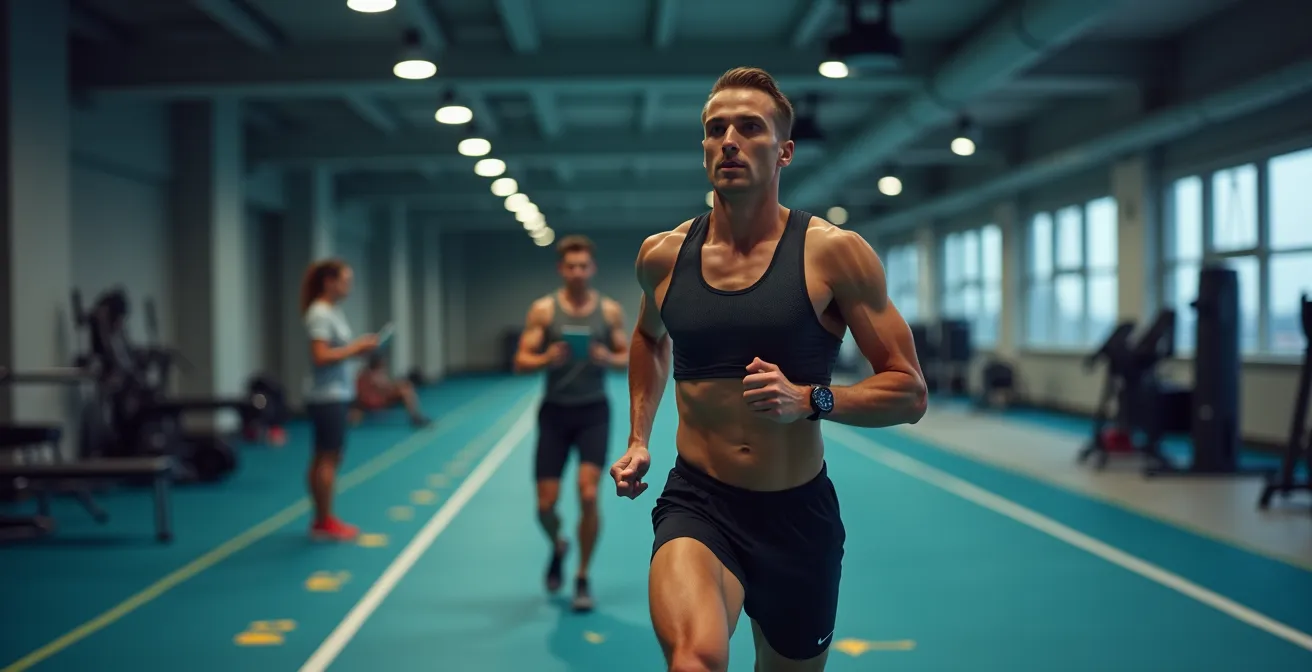
The greatest failure in modern athletic training is data collection without a decision framework.
- Low Heart Rate Variability (HRV) is not a “bad score”; it’s a non-negotiable command from your nervous system to alter training intensity.
- Muscle imbalances and excessive workload ratios aren’t theoretical concepts; they are quantifiable precursors to catastrophic injuries like ACL tears.
Recommendation: Build “if-then” protocols for your key metrics to turn raw physiological data into automated, injury-prevention action.
For any serious coach or athlete, the training environment is a high-wire act. You balance on the razor’s edge between pushing for peak adaptation and tipping into the chasm of overtraining, fatigue, and catastrophic injury. The market is now flooded with wearables, all promising to give you an edge by tracking every conceivable metric: sleep stages, resting heart rate, and the ever-present Heart Rate Variability (HRV). This has led to a state of data overload, where athletes and coaches are drowning in numbers but starved for wisdom.
The common advice to “listen to your body” or “track your data” is fundamentally incomplete. It promotes passive observation, not decisive action. But what if the goal wasn’t just to *see* the data, but to act on it with pre-defined, physiological rules? The critical evolution in elite conditioning is the shift from passive monitoring to an active Physiological Decision Framework. This is the system that separates the perpetually injured from the consistently elite. It’s about translating objective biometric outputs into non-negotiable adjustments in training load, volume, and recovery strategies.
This is not about collecting more data; it’s about building superior protocols. This guide deconstructs how to build and implement that framework. We will dissect the hard science behind readiness signals, analyze the biometric impact of different power-building modalities, identify the precise imbalances that predict injury, and codify recovery protocols that are guided by real-time physiological feedback, not a generic clock.
To navigate this complex but crucial subject, this article is structured to provide a clear, data-driven pathway. The following sections break down each key component of a biometric-led injury prevention strategy.
Summary: A Coach’s Guide to Biometric Injury Prevention
- Why Low HRV Signals You Should Skip Today’s Intense Workout?
- How to Plan a Macro-Cycle for Peaking at the Championship?
- Isokinetic Machines or Barbell Cleans: Which Builds Explosive Power?
- The Muscle Imbalance That Leads to ACL Tears in Female Athletes
- How to Use Compression Therapy Immediately Post-Game?
- How to Set Up a Motion Analysis Lab on a Limited Budget?
- Can Consumer Wearables Replace Clinical Tools for Heart Monitoring?
- Sports Nutrition: How to Calculate Macros for Endurance vs Power Sports?
Why Low HRV Signals You Should Skip Today’s Intense Workout?
Heart Rate Variability (HRV) is not a wellness trend; it is the most direct, non-invasive window into the state of your Autonomic Nervous System (ANS). A high HRV indicates a state of readiness, a system that is resilient and dominated by the parasympathetic (“rest and digest”) branch. Conversely, a suppressed HRV is a physiological red flag. It signals that your sympathetic (“fight or flight”) system is in overdrive due to accumulated stress—be it from training, poor sleep, or life. Ignoring this signal is professional negligence.
Training in a state of low HRV is like revving an engine that’s already overheating. You will not drive positive adaptation; you will accelerate fatigue, blunt performance gains, and dramatically increase injury risk. In fact, compelling research indicates that HRV-guided training appears to induce greater performance gains than rigid, pre-planned programs. Why? Because it aligns training stress with the body’s actual capacity to adapt on any given day. A low HRV score is not a sign of weakness; it’s an objective command to down-regulate intensity.
A true Physiological Decision Framework removes subjectivity. It uses specific biometric thresholds to dictate action. Instead of “feeling tired,” you have hard data. Here is a tiered response protocol based on daily HRV readings against your 7-day rolling average:
- HRV -5% from baseline: Proceed with the planned workout but with caution. Consider reducing peak intensity or volume by 10-15%.
- HRV -10% from baseline: The planned high-intensity session is canceled. Substitute it with active recovery (e.g., light cycling, swimming) or dedicated technique and skill work with low CNS demand.
- HRV -20% from baseline: This dictates a mandatory rest day. Focus can shift to mental skills training, video analysis, or mobility work.
It’s crucial to confirm these readings with subjective wellness scores (e.g., sleep quality, mood, soreness) to avoid overreacting to single-day outliers, but the biometric data must lead the decision-making process.
How to Plan a Macro-Cycle for Peaking at the Championship?
Traditional periodization models map out training blocks—preparation, competition, transition—across a macro-cycle with pre-determined intensity and volume. While structurally sound, this model’s primary flaw is its rigidity. It assumes a linear, predictable rate of adaptation for every athlete. Biometrics shatter this assumption, introducing a dynamic, auto-regulatory layer to long-term planning. The macro-cycle becomes a roadmap, but daily HRV and workload data determine the actual speed and intensity of the journey.
The goal is to orchestrate a peak in performance by ensuring the athlete arrives at the championship in a state of high readiness and full adaptation, not accumulated fatigue. By tracking the load-response dynamic, a coach can titrate stress with precision. For instance, after a high-volume block, if an athlete’s HRV fails to rebound within the expected 48-72 hour window, the planned “intensity” micro-cycle must be delayed. The framework forces you to respect individual recovery timelines. A 12-week study on endurance runners using HRV-guided training starkly illustrated this; it showed that while some individuals achieve massive fitness gains, others can experience negative adaptations in response to a similar training load.
This data-driven approach allows a coach to manage the entire adaptive process, ensuring each training block builds effectively on the last. The visual below represents how a coach and athlete can analyze these complex data waves over time to fine-tune the training cycle for optimal peaking.

As you can see, the modern performance lab is less about brute force and more about surgical precision. Instead of blindly following a calendar, the coach uses biometric feedback to make informed decisions: extending a recovery week if the team’s average HRV is suppressed, or strategically injecting an overload day when readiness scores are universally high. This transforms the macro-cycle from a static document into a living, breathing plan that adapts to the athlete’s real-time physiological state.
Isokinetic Machines or Barbell Cleans: Which Builds Explosive Power?
Both isokinetic dynamometers and Olympic lifts like the barbell clean are potent tools for developing explosive power (Rate of Force Development). However, their selection and application within a training program should be dictated by biometric readiness, not just coaching preference. The fundamental difference lies in their Central Nervous System (CNS) demand and inherent injury risk when an athlete is in a fatigued state.
Barbell cleans are a ballistic, multi-joint movement that requires immense technical proficiency, coordination, and neurological drive. They impose a massive demand on the CNS. When an athlete’s HRV is low, signaling high sympathetic stress and diminished neuromuscular control, performing heavy or complex cleans is a high-risk, low-reward endeavor. The risk of technical breakdown and subsequent injury skyrockets. Isokinetic machines, by contrast, provide accommodating resistance at a constant speed. This isolates muscle groups and allows for maximal force production throughout the range of motion with significantly lower coordination demand and injury risk. This is because advanced motion analysis reveals that biometric data provides a comprehensive understanding of an athlete’s movement patterns, highlighting when they are compromised.
The choice is not about which is “better” in a vacuum, but which is appropriate *today*. On a high-HRV day, the barbell clean is a superior tool for developing systemic, athletic power. On a low-HRV day, the isokinetic machine is the intelligent choice to train maximal force production safely, without further taxing a stressed CNS. This decision-making process is a core tenet of a biometric-led program.
| Metric | Isokinetic Machine | Barbell Clean | Biometric Indicator |
|---|---|---|---|
| CNS Demand | Moderate | High | HRV Recovery Time |
| Injury Risk When Fatigued | Low | High | Movement Quality Degradation |
| Post-Session HRV Dip | 5-10% | 15-25% | 24-hour HRV measurement |
| Recommended When HRV Low | Yes | No | Daily Readiness Score |
This table codifies the decision framework. The biometric indicators are not just data points; they are direct inputs that determine the day’s training menu. This approach ensures that the pursuit of power doesn’t come at the cost of the athlete’s availability.
The Muscle Imbalance That Leads to ACL Tears in Female Athletes
Anterior Cruciate Ligament (ACL) tears are one of the most devastating non-contact injuries in sports, with female athletes being disproportionately affected. While many factors contribute, a primary biomechanical culprit is a measurable and correctable muscle imbalance: the quadriceps-to-hamstring (Q:H) strength ratio. Many athletes exhibit “quad dominance,” where the quadriceps muscles overpower the hamstrings during deceleration, jumping, and cutting movements. This imbalance forces the ACL to act as a primary brake against tibial translation, placing it under immense, unsustainable strain.
Biometrics transform this problem from a theoretical risk into a quantifiable target. Using electromyography (EMG) sensors during functional movement screens (like a drop jump), coaches can measure the precise activation and force production patterns of the quadriceps versus the hamstrings. This data provides a clear picture of the neuromuscular reality of an athlete’s movement strategy. The goal is to train the hamstrings to fire more forcefully and earlier during landing phases, effectively co-contracting with the quads to protect the knee joint.
Furthermore, this risk is amplified by fatigue. As an athlete fatigues, neuromuscular control degrades, and they revert to their most dominant (and often flawed) movement patterns. This is where workload monitoring becomes critical. Using metrics like the Acute:Chronic Workload Ratio (ACWR), coaches can identify spikes in training load that place an athlete in a high-risk “fatigue state.” Research from sports medicine specialists confirms this, noting that by using the acute to chronic workload ratio, the likelihood of a recurrent injury can be predicted. An athlete with a known Q:H imbalance who also presents with a high ACWR must have their high-intensity, multi-directional training volume immediately curtailed.
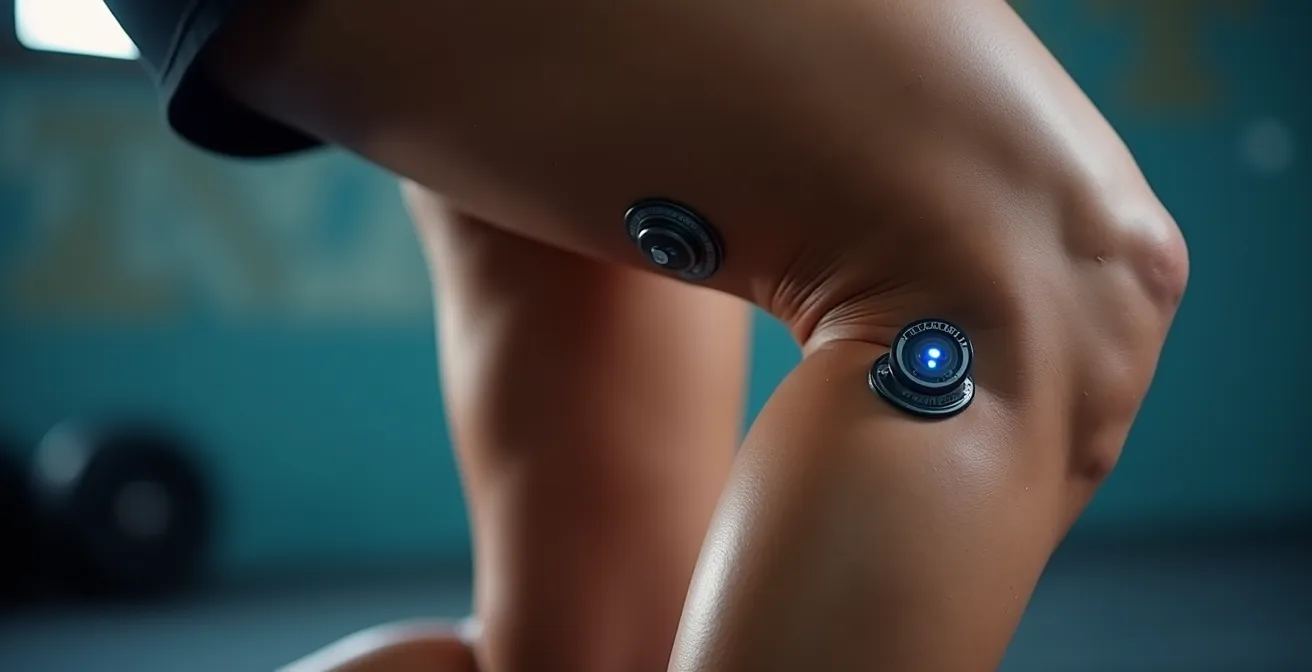
Injury prevention here is a two-pronged attack. First, use biomechanical screening (EMG, force plates) to identify the underlying Q:H imbalance and implement a targeted hamstring strengthening and neuromuscular re-education program. Second, use daily workload and readiness monitoring (ACWR, HRV) to manage fatigue and ensure the athlete is never exposed to high-risk movements when their system is too compromised to execute them safely.
How to Use Compression Therapy Immediately Post-Game?
Post-game recovery is a race against time. The objective is to clear metabolic waste, reduce inflammation, and shift the autonomic nervous system back towards a parasympathetic state as rapidly as possible. Dynamic compression therapy (e.g., NormaTec boots) is a popular modality, but its application is often arbitrary—typically a generic “20 minutes for everyone.” A biometric-guided approach personalizes and optimizes this process for superior results.
The true measure of recovery is the rebound of your HRV. Therefore, the goal of a compression session is not to hit a certain time on a clock, but to facilitate a measurable shift in your ANS. By monitoring HRV continuously during the session with a chest strap and a reliable app, you can observe the direct physiological response. The session is complete when your HRV begins to trend upwards, signaling that your body is successfully shifting out of its post-competition, sympathetically-driven state.
This data-driven protocol turns a passive modality into an active, targeted intervention. For some athletes, this HRV rebound might occur in 15 minutes. For others, after a particularly grueling match, it might take 30-40 minutes and require stacking with other parasympathetic activities like guided breathing or mindfulness exercises to achieve the desired effect. This approach is validated by elite organizations.
Case Study: Real Madrid’s Biometric Recovery System
Top-flight football club Real Madrid has integrated a comprehensive biometric system to manage player load and accelerate recovery. By utilizing wearable sensors and AI-driven data analysis, their staff tracks key metrics like HRV, muscle fatigue, and hydration. This allows for hyper-personalized training and recovery programs. A notable success was the rehabilitation of striker Karim Benzema, who used biometric insights from wearables to fine-tune his recovery from recurring muscle injuries, optimizing his return to peak form.
A complete biometric-guided recovery protocol would look like this:
- Monitor HRV continuously during the compression therapy session.
- Continue compression until HRV shows a clear rebound towards the athlete’s baseline (typically 20-30 minutes).
- If HRV remains suppressed, stack the therapy with parasympathetic activities like diaphragmatic breathing.
- For high muscle soreness scores (subjective data), combine compression with cold therapy to enhance the anti-inflammatory effect.
- Track the next-day morning HRV and Rate of Perceived Exertion (RPE) to validate the effectiveness of the protocol and adjust future durations.
How to Set Up a Motion Analysis Lab on a Limited Budget?
The idea of a “motion analysis lab” often conjures images of million-dollar facilities with Vicon camera systems and force plates embedded in the floor. While these are the gold standard, the core principles of biomechanical analysis can be implemented effectively on a shoestring budget. The key is to prioritize consistency, standardized protocols, and the clever use of accessible consumer technology. You don’t need a perfect lab; you need a reliable system for tracking changes over time.
The foundation of a budget lab is video. Using two modern smartphones capable of high-frame-rate recording, you can capture synchronized frontal and sagittal plane views of an athlete performing a movement (e.g., a squat, a jump). Software like Kinovea, which is free, can then be used for 2D kinematic analysis—measuring joint angles, velocities, and movement paths. While it lacks 3D precision, it is more than sufficient for identifying gross asymmetries, technical flaws, and tracking corrective progress. The validity of this approach is even supported by recent validation studies that confirm the reliability of smartphone applications for certain biometric measurements like HRV, lending credibility to their use in other areas.
To complement video, affordable Inertial Measurement Unit (IMU) sensors from consumer fitness trackers or dedicated brands can provide data on acceleration and orientation. Pairing these tools with free data collection platforms like Google Forms for subjective wellness scores (RPE, sleep, stress) creates a surprisingly powerful data ecosystem. The priority is not absolute accuracy but impeccable consistency: the camera positions, distance, and lighting must be identical for every single test to ensure the data is comparable week-to-week.
Action Plan: Your Budget Motion Lab Setup
- Video Capture: Use 2 smartphones with the Kinovea app for multi-angle video recording. One for sagittal view, one for frontal view.
- Sensor Data: Purchase an affordable IMU sensor or use the raw data from a consumer fitness tracker. For readiness, pair a free HRV app with a budget-friendly chest strap (under $50).
- Standardize Protocol: Always place cameras at exactly 90° and 45° angles to the athlete. Maintain a consistent 3-meter distance and identical lighting conditions for all recordings.
- Subjective Data Collection: Create a daily wellness questionnaire using Google Forms to track RPE, sleep quality, muscle soreness, and mood.
- Data Analysis: Use Google Sheets to create simple weekly comparison charts, tracking trends in joint angles from Kinovea alongside HRV and RPE scores.
Can Consumer Wearables Replace Clinical Tools for Heart Monitoring?
This question requires a nuanced, context-dependent answer. For the purpose of athletic performance monitoring, the answer is largely yes. For clinical cardiac diagnosis, the answer is an emphatic no. The distinction lies in the intended use case: relative trending versus absolute diagnosis. As medical experts from The Conversation state in their analysis, “Endurance athletes now commonly track HRV as one way to monitor their overall physiological state.” The key is “monitor.”
Several fitness wearables report heart rate variability, either as a stand-alone metric or used in the calculation of ‘readiness’ or ‘recovery’ scores. Endurance athletes now commonly track HRV as one way to monitor their overall physiological state.
– The Conversation Medical Experts, Heart Rate Variability in Modern Sports Medicine
Consumer wearables (like watches and rings) excel at tracking relative changes in metrics like HRV and resting heart rate. A coach doesn’t need to know if an athlete’s HRV is an absolutely perfect 65ms; they need to know that today’s 45ms is a significant drop from their 7-day average of 65ms. This relative drop is the actionable data point for adjusting training load. In this context, the precision of a clinical-grade ECG is unnecessary. The wearable is a superb tool for flagging deviations from the norm.
However, the moment a potential pathology is suspected, the wearable’s role ends and a clinical tool’s role begins. If a wearable’s algorithm flags a potential arrhythmia like Atrial Fibrillation (AFib), it is not a diagnosis. It is a signal to seek an immediate clinical ECG for definitive analysis by a cardiologist. Similarly, if an athlete’s HRV remains chronically suppressed for weeks despite adequate rest, this warrants a clinical investigation to rule out underlying medical issues.
| Use Case | Consumer Wearable Sufficient | Clinical Referral Needed |
|---|---|---|
| Daily HRV Trending for Training Load | Yes – 7-day rolling averages are key | No |
| Post-Workout Recovery Tracking | Yes – Relative changes matter most | No |
| Atrial Fibrillation (AFib) Alerts | For initial detection alert only | Yes – Immediate ECG required for diagnosis |
| Sustained Low HRV Despite Rest | For initial monitoring phase | Yes – If trend persists beyond 2 weeks |
| Post-Diagnosis Condition Monitoring | Yes – But only with physician approval | Regular clinical follow-ups are mandatory |
Key Takeaways
- Raw biometric data is useless without a pre-defined physiological decision framework that dictates specific actions.
- Low HRV is a direct command from the autonomic nervous system; it is a non-negotiable signal to reduce CNS-intensive training load.
- Specific muscle imbalances, like the Quad-to-Hamstring ratio in female athletes, are quantifiable and correctable precursors to catastrophic injury.
Sports Nutrition: How to Calculate Macros for Endurance vs Power Sports?
The nutritional demands of a 100-meter sprinter and a marathon runner are fundamentally different, rooted in the energy systems they rely on. Power athletes operate primarily in the anaerobic realm, utilizing the ATP-PC and glycolytic systems for short, explosive bursts. Their primary need is for readily available glycogen and sufficient protein for muscle repair and hypertrophy. Endurance athletes, conversely, operate aerobically, relying on the oxidative system which utilizes both carbohydrates and fats for fuel over prolonged periods.
A static macronutrient prescription, however, is an outdated model. Just as training load must be modulated based on biometric feedback, so too should nutritional intake. This is the frontier of performance nutrition: biometrically-adjusted fueling. Your daily nutritional strategy should be influenced by your physiological readiness. For example, a low HRV day indicates high systemic stress. In this state, increasing carbohydrate intake can provide crucial support to the CNS and immune system, while potentially reducing fat intake can minimize digestive load, freeing up metabolic resources for recovery.
This dynamic approach is being validated at the highest levels of sport. Data from platforms used by championship-winning teams shows the sheer scale of this tracking; one platform tracked nearly 8,000 hours of SpO2 data and over 9,000 hours of HRV data across 33 active players in a single season. This data isn’t just for training; it directly informs nutritional and recovery interventions. A biometrically-adjusted fueling protocol could be structured as follows:
- On low HRV days: Increase total carbohydrates by 10-15% to support the central nervous system and bolster recovery.
- When HRV is chronically suppressed: Slightly reduce fat intake to minimize digestive stress and prioritize more easily metabolized energy sources.
- Using Continuous Glucose Monitor (CGM) data: Identify optimal carbohydrate timing to ensure peak glucose availability 2-3 hours pre-training.
- Protein Timing: Time significant protein intake windows to coincide with peak HRV recovery periods, which typically occur during deep sleep cycles.
- Caloric Adjustments: Adjust total daily calories based on the 3-day HRV trend rather than reacting to single-day fluctuations.
This transforms nutrition from a static plan into a dynamic, responsive system that works in concert with training to optimize adaptation and prevent overtraining.
Stop guessing. Start measuring, interpreting, and acting. Build your physiological decision framework today and transform your athletes’ potential into durable, championship-winning performance.