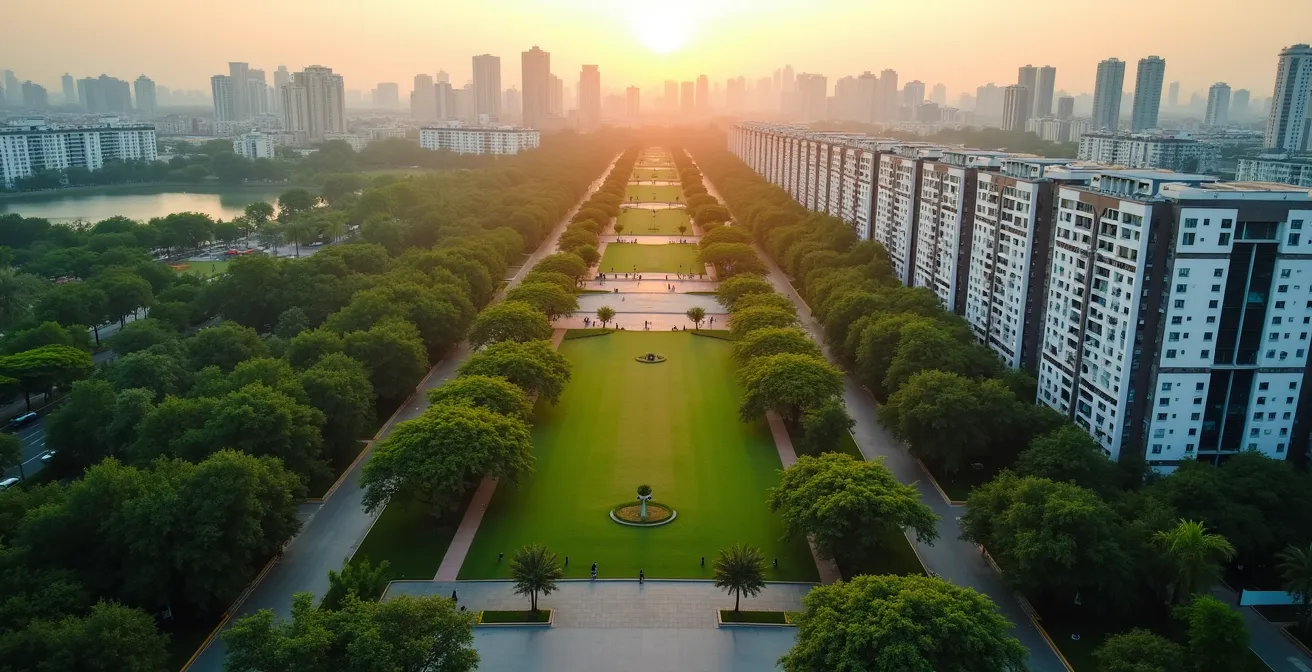
Contrary to the belief that public health is solely a matter of healthcare access, the primary driver of chronic disease in cities is the built environment itself.
- Specific design interventions, like park proximity and sidewalk width, have a quantifiable, dose-dependent effect on health metrics like anxiety and physical activity.
- Systemic choices in zoning and material selection are direct causal factors for outcomes ranging from food deserts to poor indoor air quality.
Recommendation: Treat urban planning as a form of clinical intervention, prioritizing evidence-based designs that yield predictable public health returns on investment.
The connection between a city’s layout and the health of its citizens is not a new concept. For decades, officials and architects have acknowledged that factors like green space and walkability are “good” for the public. Yet, many mega-cities continue to grapple with rising rates of chronic conditions like obesity, anxiety, and respiratory illness. As Kimberley Kinder of the University of Michigan’s School of Public Health notes, “We now have chronic disease associated with the built environment, for example the relationship between obesity and suburban infrastructures.” This reality suggests a fundamental disconnect between acknowledging a problem and implementing an effective solution.
The conventional approach often stops at broad, aspirational goals. But what if the true key to unlocking urban health lies not in vague principles, but in treating the built environment as a clinical tool? What if every design choice—from zoning laws to the type of insulation used in a building—could be viewed as a specific “prescription” with a predictable, measurable health outcome? This perspective shifts the focus from aesthetics to epidemiology, demanding data-driven proof of efficacy for every intervention.
This article moves beyond the platitudes to examine the specific causal pathways linking urban design to public health. We will explore how targeted interventions can produce quantifiable improvements, analyze the systemic oversights that create health crises, and provide an evidence-based framework for architects and city officials to design healthier, more resilient urban communities. By adopting an epidemiological lens, we can transform our cities from passive containers of people into active instruments for community well-being.
This in-depth analysis will explore the concrete ways in which urban environments shape our health. The following summary outlines the key areas we will cover, from the psychological impact of green spaces to the critical role of accessibility in an aging society.
Summary: A Blueprint for Health-Centric Urban Environments
- Why Access to Parks Reduces Anxiety Rates by 20% in Urban Areas?
- How to Redesign Neighborhoods to Encourage Daily Walking?
- Air Filters or Traffic Bans: Which Best Protects School Children?
- The Zoning Oversight That Creates Chronic Food Deserts
- When to Expand ER Capacity: Modeling Pandemic Scenarios
- Fungi or Glass: Which Insulation is Safer for Indoor Air Quality?
- Why Murals in High-Crime Areas Correlate With Lower Vandalism Rates?
- Why Customer-Centric UX Must Prioritize Accessibility for Aging Users?
Why Access to Parks Reduces Anxiety Rates by 20% in Urban Areas?
The therapeutic effect of nature is often discussed in abstract terms, but its impact on mental health is quantifiable and clinically significant. The key lies in understanding green space not as a luxury, but as essential public health infrastructure. From an epidemiological standpoint, proximity and access to parks create a “dose-response relationship” with mental well-being. The mechanism is twofold: passive exposure to natural environments reduces cortisol levels and mental fatigue, while the spaces themselves encourage physical activity and social interaction, both of which are proven buffers against anxiety and depression.
Evidence strongly supports this clinical view. Rigorous studies show that residents with easy access to green space are 20% less likely to be diagnosed with anxiety or depression than their counterparts in nature-deprived areas. This is not mere correlation. A 2023 study in Philadelphia demonstrated a direct causal link, finding that individuals living closer to green spaces reported measurably better physical health and lower stress levels. For city planners, this means park placement is not an aesthetic choice but a targeted mental health intervention. Prioritizing smaller, accessible green pockets in dense neighborhoods can yield a higher public health return than a single, large park that is difficult for many residents to reach.
Ultimately, treating parks as a non-negotiable component of urban health infrastructure provides a powerful, cost-effective tool for reducing the population’s baseline anxiety levels.
How to Redesign Neighborhoods to Encourage Daily Walking?
Encouraging active transport like walking is a cornerstone of preventative public health, directly combating sedentary lifestyles linked to obesity, diabetes, and cardiovascular disease. However, telling people to walk more is ineffective if the built environment makes it unsafe, unpleasant, or inefficient. The solution is to design neighborhoods where walking is the most logical and enjoyable choice for short trips. This involves a shift from car-centric design to a human-scaled approach that prioritizes the pedestrian experience.
Key design “prescriptions” for walkability include:
- Mixed-Use Zoning: Integrating residential, commercial, and recreational spaces ensures that daily needs—groceries, cafes, parks—are within a short walking distance, a concept popularized by the “15-minute city” framework.
- Pedestrian-First Infrastructure: This means wide, unobstructed sidewalks, frequent and clearly marked crosswalks, and a protective buffer of street trees or parked cars separating pedestrians from traffic.
- Traffic Calming Measures: Implementing narrower streets, speed bumps, and chicanes naturally slows down vehicles, making the environment safer and more comfortable for those on foot.
This approach creates a virtuous cycle. Walkable neighborhoods not only boost physical activity but also reduce car dependency. This, in turn, helps mitigate a city’s most pervasive health threat: air pollution. The World Health Organization (WHO) attributes an astonishing 7 million premature deaths annually to air pollution, making the redesign of neighborhoods a critical environmental and public health imperative.
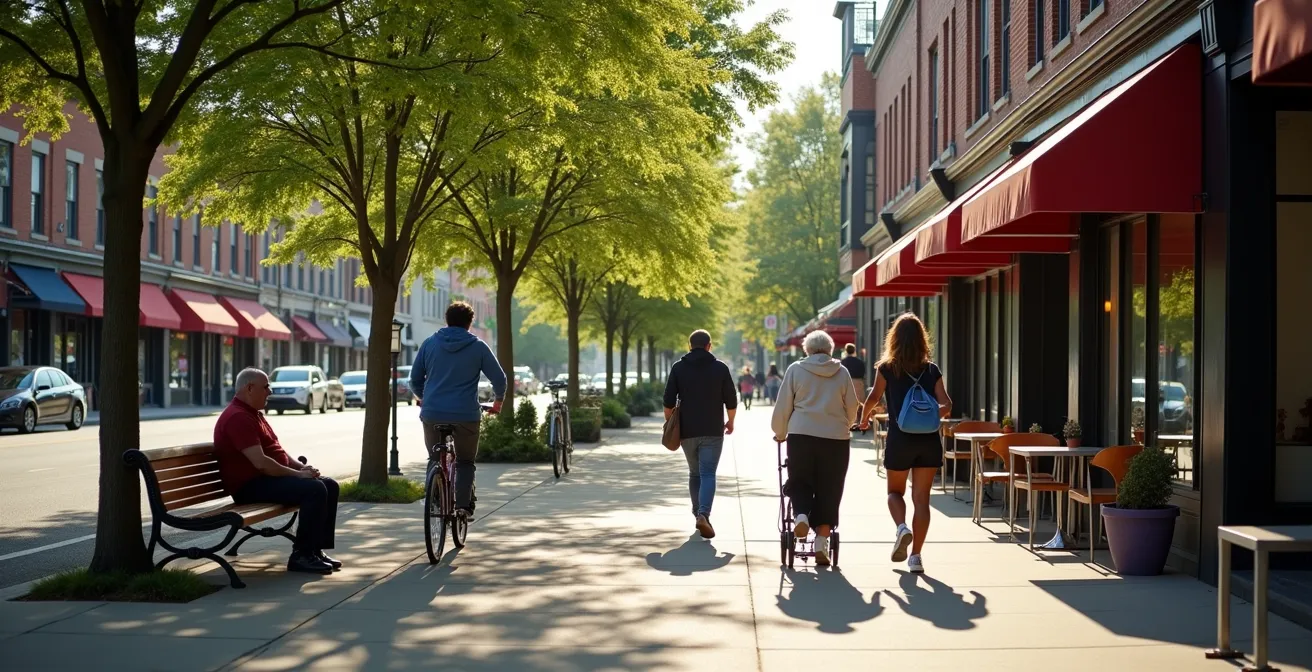
As this visualization shows, a walkable street is about more than just a sidewalk. It’s a holistic ecosystem that integrates nature, commerce, and human activity, making the choice to walk both safe and appealing.
By engineering daily physical activity back into urban life, we can address some of the most pressing chronic diseases of our time at their source.
Air Filters or Traffic Bans: Which Best Protects School Children?
Children are uniquely vulnerable to the effects of air pollution due to their developing respiratory systems and higher breathing rates. With WHO data showing that in 2012, 12.6 million deaths were attributable to unhealthy environments, protecting air quality around schools is a non-negotiable public health duty. The debate often centers on two main approaches: technological fixes like indoor air filtration (HEPA filters) versus policy-based interventions like banning traffic during school hours. An evidence-based comparison is crucial for allocating resources effectively.
Choosing the right intervention requires a clinical assessment of costs, benefits, and feasibility. The following analysis breaks down the primary options available to city officials and school administrators, evaluating their effectiveness at reducing harmful PM2.5 particulate matter.
| Intervention Type | PM2.5 Reduction | Implementation Cost | Co-benefits |
|---|---|---|---|
| HEPA Filters (Indoor) | 50-70% | High (ongoing energy costs) | Limited to indoor spaces |
| Traffic Bans (School Hours) | 25-40% | Low (signage & enforcement) | Increased walking/cycling, reduced noise |
| Green Barriers (Hedges) | 15-25% | Medium (one-time planting) | Aesthetic improvement, biodiversity |
| Combined Approach | 60-80% | High (but comprehensive) | Maximum health protection |
The data reveals that while HEPA filters offer the highest PM2.5 reduction indoors, their impact stops at the classroom door and they incur significant ongoing costs. Traffic bans, while offering a lower percentage of direct reduction, provide substantial co-benefits like promoting physical activity and reducing noise pollution, which also impacts learning. The most effective strategy, though costly, is a combined approach that layers multiple interventions. However, for municipalities with limited budgets, a low-cost traffic ban provides the best public health return on investment by tackling the pollution source directly while encouraging healthier behaviors.
Ultimately, a multi-layered defense that combines source control (traffic bans) and exposure reduction (filters, green barriers) offers the most robust protection for vulnerable school children.
The Zoning Oversight That Creates Chronic Food Deserts
The term “food desert”—an area with limited access to affordable and nutritious food—is often misconstrued as a market failure. In reality, it is more accurately described as a predictable outcome of outdated and inequitable urban planning, specifically single-use zoning. When vast residential areas are legally separated from all commercial activity, it becomes structurally impossible for grocery stores to exist within walking distance. This forces residents to depend on cars or inadequate public transit to access healthy food, a system that disproportionately fails low-income households, the elderly, and those with mobility challenges. As Assistant Professor Roshanak Mehdipanah states, “Where you live certainly matters. But we also need to ask why we live in this particular location in the first place.”
The creation of food deserts is a textbook example of how planning decisions can directly cause negative health outcomes, leading to higher rates of obesity, diabetes, and malnutrition. The problem is not a lack of demand for healthy food, but a regulatory barrier to its supply. Combating this requires a fundamental rethinking of zoning codes to re-integrate food access into the fabric of neighborhoods. This is not just a social justice issue; it is a critical public health intervention.
Action Plan: Systematically Eradicating Food Deserts Through Urban Policy
- Reform Zoning Codes: Actively dismantle single-use zoning to permit small-scale commercial uses, like corner grocery stores and produce stands, within residential areas.
- Incentivize Grocery Investment: Offer targeted tax breaks, low-interest loans, and expedited permitting for full-service supermarkets to open in officially designated underserved areas.
- Legalize Urban Agriculture: Update municipal codes to explicitly permit and encourage community gardens, urban farms, and rooftop greenhouses in all residential zones.
- Optimize Public Transit: Redesign bus routes to create direct, high-frequency connections between residential hubs and existing supermarkets and farmers’ markets.
- Support Interim Solutions: Provide logistical and financial support for mobile markets, food co-ops, and subsidized fresh-food delivery programs to bridge the gap while structural changes are implemented.
By treating food access as an essential utility, like water or electricity, cities can begin to reverse decades of planning that has systematically disconnected communities from their most basic nutritional needs.
When to Expand ER Capacity: Modeling Pandemic Scenarios
The COVID-19 pandemic exposed a critical vulnerability in urban health systems: the inability of physical hospital infrastructure to scale rapidly during a surge event. As we look to the future, the question for city planners is not *if* another pandemic will occur, but *how* to build resilient infrastructure that can adapt. With the WHO projecting that 70% of the world’s population will live in cities by 2050, the strain on emergency services will only intensify. Simply building more conventional ERs is both financially unsustainable and inefficient during non-crisis periods.
The solution lies in proactive, flexible design rather than reactive construction. A stunning insight from the WHO highlights the scale of the opportunity: an estimated 75% of the urban infrastructure that will exist in 2050 has not yet been built. This presents a once-in-a-generation chance to bake resilience into the DNA of our cities. Instead of static ERs, architects and planners must model future pandemic scenarios and design “flex-space” healthcare facilities.
This approach could involve:
- Modular Construction: Designing hospitals with pre-fabricated modules that can be rapidly deployed to expand capacity for intensive care or quarantine wings.
- Convertible Public Spaces: Pre-designating and equipping convention centers, sports arenas, and community halls for swift conversion into field hospitals, complete with plans for oxygen lines, power grids, and sanitation.
- Decentralized Care Pods: Creating a network of smaller, neighborhood-level clinics that can handle testing, vaccination, and low-acuity care, relieving pressure on central hospitals during a surge.
By modeling for crises and building for adaptability, cities can ensure their healthcare systems bend without breaking under the pressure of the next public health emergency.
Fungi or Glass: Which Insulation is Safer for Indoor Air Quality?
The conversation around urban health often focuses on outdoor air pollution, but the reality is that building materials have a more direct and sustained impact on our well-being. With urban residents spending approximately 90% of their time indoors, the quality of the air we breathe inside our homes and offices is paramount. Traditional insulation materials like fiberglass, while effective thermally, can release volatile organic compounds (VOCs) and fine particulate matter into the air, contributing to “sick building syndrome,” allergies, and respiratory issues.
This has spurred innovation in bio-materials, with mycelium—the root structure of fungi—emerging as a promising, health-centric alternative. Mycelium-based insulation is grown, not manufactured, using agricultural waste. It is naturally fire-resistant, free of harmful chemicals, and fully biodegradable. From an indoor air quality perspective, its primary advantage is its inert nature; it does not off-gas VOCs. Furthermore, its porous, fibrous structure provides excellent acoustic dampening, contributing to a quieter and less stressful indoor environment.

The intricate, natural matrix of mycelium, seen here in a macro view, stands in stark contrast to synthetic, fiber-shedding materials. While fiberglass remains a low-cost standard, the decision to specify a material like mycelium is a direct “prescription” for better long-term respiratory health for a building’s occupants. For architects and builders, the choice is between prioritizing upfront cost and prioritizing the cumulative health of the end-user. As building codes evolve to incorporate health metrics, the lifecycle cost of a material—including its impact on occupants’ well-being—will become an increasingly critical factor.
Choosing materials that support, rather than compromise, indoor air quality is a fundamental responsibility in the design of healthy urban habitats.
Why Murals in High-Crime Areas Correlate With Lower Vandalism Rates?
At first glance, public art may seem like a “soft” intervention with little connection to hard metrics of public health and safety. However, evidence suggests a strong correlation between the introduction of community-led murals in high-crime areas and a subsequent reduction in petty crime and vandalism. This phenomenon can be understood through the lens of social epidemiology and the “broken windows” theory in reverse. Where neglected, vandalized spaces signal a lack of community oversight and invite further decay, a vibrant, well-maintained mural signals community ownership and pride.
This intervention works on multiple levels. The process of creating the mural often involves local residents, fostering social cohesion and a shared sense of investment in the space. The finished artwork replaces blight with beauty, which can have a measurable positive effect on residents’ mental well-being and perception of safety. As urban planning professor Kimberley Kinder reminds us, “Urban planning and public health, a century ago, were basically synonymous, because urban planning was a way to promote the health and safety of urban residents.” Re-introducing art and culture as a planning tool is a return to this holistic vision.
A parallel can be seen in a case study from New York City, where the transformation of dormant plots of land into community gardens not only improved the urban park environment but also significantly reduced vandalism. In both cases, the key was not just the physical change but the signal of active stewardship. A mural communicates that “people care about this place,” a powerful deterrent to casual acts of defacement. It is a low-cost, high-impact prescription for strengthening the social fabric of a neighborhood, which is the foundation of public safety.
For city officials, supporting public art is not a frivolous expense but a strategic tool for crime prevention and community-building, yielding tangible returns in safety and social well-being.
Key Takeaways
- The built environment is a primary determinant of public health, with design choices acting as “prescriptions” for community well-being.
- Quantifiable data, such as a 20% reduction in anxiety from park access, must guide urban planning decisions over aesthetic preference.
- Systemic issues like single-use zoning and car-centric design are the root causes of chronic health problems like food deserts and sedentary lifestyles.
Why Customer-Centric UX Must Prioritize Accessibility for Aging Users?
The principles of public health design extend beyond physical infrastructure into the very fabric of urban life, which increasingly includes digital interfaces and public services. For an aging population, the “user experience” (UX) of a city—from navigating a crosswalk to using a public transit app—is a critical determinant of their independence, social connection, and safety. A customer-centric approach in urban planning must therefore prioritize accessibility not as a niche compliance issue, but as a core tenet of designing for everyone.
This is best illustrated by the “curb-cut effect,” a foundational concept in universal design. Curb cuts were initially created for wheelchair users, but they ended up providing a massive benefit to parents with strollers, travelers with luggage, delivery workers, and cyclists. By solving for the most vulnerable user, the experience was improved for all. Applying this to urban UX means designing with the needs of an elderly resident in mind: longer crossing times at intersections, more benches for resting, larger font sizes on signage, and simple, intuitive public service websites. These are not just “nice-to-haves”; they are prescriptions against social isolation and physical injury.
Prioritizing accessibility yields a direct public health return on investment. Cities designed to be navigable for older adults see lower healthcare costs from reduced fall rates and decreased mental health issues stemming from loneliness. By viewing the city through the lens of its most vulnerable residents, planners and architects can identify and eliminate points of friction that negatively impact everyone. True customer-centricity in urban design means creating an environment where independence and dignity are not eroded by age or ability.
The ultimate measure of a city’s design is not how it serves the young and able-bodied, but how it empowers every resident to participate fully and safely in public life. For a deeper, evidence-based strategy, reviewing the foundational principles of health-centric design is the essential next step.
Frequently Asked Questions on Urban Planning and Public Health
How does urban design affect elderly mobility?
Longer crossing times, more benches, clearer signage, and level sidewalks significantly improve elderly residents’ ability to navigate cities independently, reducing social isolation.
What is the ‘curb-cut effect’ in urban planning?
Design features created for disabled groups (like curb cuts for wheelchairs) end up benefiting many others including parents with strollers, travelers with luggage, and delivery workers.
How do accessible cities impact public health costs?
Cities designed for aging populations see reduced healthcare costs through lower fall rates, increased physical activity, and decreased mental health issues from social isolation.